About Richard Rose
Who is Richard Rose?
Author, poet, philosopher, and founder of the
TAT Foundation and the Albigen System
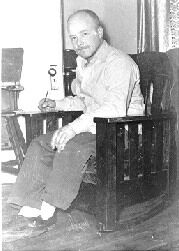
Richard Rose (1917 – 2005) is one of the most profound and unusual spiritual teachers this country has ever produced. A native son from the hills of West Virginia, Mr. Rose underwent a cataclysmic spiritual experience at the age of thirty that left him with an intimate understanding of the secrets of life and death. He was often referred to as a Zen Master by the people who knew him because of the depth of his wisdom and his ability to make direct mind contact with his students. But he did not expound traditional Zen or any other traditional teachings. What he taught sprang from his personal realization of Truth.
Though Richard Rose authored several books on esoteric philosophy and had lectured widely in universities across the country, he remained largely unknown. He has been described, in fact, as “The greatest man no one’s ever heard of.” He appeared in newspaper articles and on local talk shows during lecture tours, and was featured in spiritual journals from time to time, but he was in some ways a throw-back to the stern Zen masters of a thousand years ago, and his hard-edged, uncompromising approach to life and spiritual work is not a path for the easy-going.
From a very early age, Richard Rose was a man on a mission: to find an answer to the great riddle of life. One of his earliest memories was writing over and over in a child’s hand, “Many are called, but few are chosen.” At the age of twelve, he entered a Capuchin seminary in Pennsylvania to study for the priesthood. He wanted, simply, to find God. After five years he left, however, disenchanted with religious life and the constant admonitions to be content to believe church doctrines, not to seek a personal experience of God.
Disillusioned with religion, he focused on physics and chemistry in college. He hoped to find the keys to the universe in atoms and molecules, but eventually realized that logic and science were yet another endless tangent. He then turned to yoga and asceticism, and in his twenties he maintained an extremely disciplined lifestyle. “I decided to make my body a laboratory,” he said, “not a cesspool.” He became a vegetarian, did not smoke or drink, and observed strict celibacy. He also spent long months in solitude on his remote farm in the hills of West Virginia. “Solitude is beautiful,” he says. “Those years of celibacy and solitude were the most joyful of my life.”
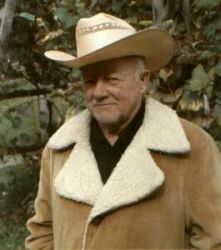
But Mr. Rose also knew he needed to seek out information about the spiritual path, and find others who were on it. And so he often crisscrossed the country in search of someone who might have achieved true wisdom. This was in the ’30s and ’40s, however, and there were few books available, and even fewer teachers. He must have presented quite an appearance in those days. He kept his head shaved, wore a goatee, and in keeping with his years in the seminary, perhaps, dressed entirely in black, including a black snap-brim fedora reminiscent of the gangsters of the day.
He would travel hundreds of miles by bus or hitchhiking because he had heard a certain book might be available in a distant library. He met with spiritualists, witch-doctors, shamans, healers, psychics, yogis, and gurus, most often coming away from those meetings disappointed, but wiser for the experience. He joined every spiritual and psychic group he could find, learned what they had to offer, then ended up rejecting almost all of them.
Along the way, he began to develop his own unique way of sifting through the information and misinformation available, looking for that which was most likely to be true. His training as a scientist led him to approach the abstract realm of the spiritual scientifically, whereas the norm was usually blind faith, wishful thinking, and confusion. This scientific approach to a spiritual search was the genesis of what he would later call The Albigen System.
He wanted to unravel the Gordian Knot, and lived only for that purpose. He decided he would rather suffer insanity or death than be ignorant of his destiny, his source, his true Self. Those who knew him then found him to be a man possessed by an insatiable desire to find out what lay behind the curtain of pretense so often accepted as a “wonderful life.” He doubted everything, and questioned everybody he met about their philosophy of life—and death. He sought only one thing: a final answer that would dissolve all his doubts and questions. He wanted THE answer.
Then, at the age of thirty, after a life of asceticism, searching, and eventually trauma, Richard Rose had a spiritual awakening of great depth. Years later, he discovered in the writings of Ramana Maharshi a descriptive term for what he had undergone—Sahaja Nirvikalpa Samadhi—the Hindu term for the maximum human experience possible, in which the individual mind dies, and the individual awareness merges totally with the source of all life and awareness—the Absolute, God, Truth. Maharshi metaphorically spoke of this experience as a river discharged into the ocean and its identity lost.
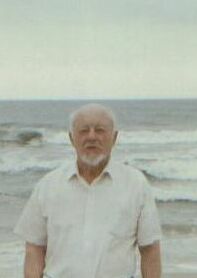
For many years afterwards Mr. Rose struggled to understand the implications of his enlightenment experience, and to translate it into a system that might help others achieve the same realization. Finally, he distilled his mountain of notes into a handbook for spiritual and philosophic seekers, outlining the many pitfalls as well as illuminating the essential elements for success on the spiritual path. It is entitled The Albigen Papers. Later, the spiritual path that this book describes became known as The Albigen System.
Richard Rose lived, spoke, and wrote without the pretense or arrogance so often found in spiritual and philosophic work. He never charged any money for his teaching, and he never closed his door to any sincere seeker, or to anyone who was troubled and wanted to discover an avenue to peace and mental clarity. Since his first public lecture in Pittsburgh in 1972, Mr. Rose maintained a lifestyle unaffected by opportunities for wealth, fortune, and fame. He was a relentless man who had the determination, inspiration, and dedication it takes to discover the total answer to the riddle of life.
- Watch Becoming the Truth: The Story of Richard Rose & the TAT Foundation:
- Read After the Absolute: The Inner Teachings of Richard Rose by David Gold with Bart Marshall, including a Forward by Joseph Chilton Pearce. This fascinating account of one student’s years with Richard Rose is also available in paperback.
- Read the Wikipedia biography on Richard Rose, including details about his teachings and influence.
- For a short, highly informative dive into Richard Rose’s teachings, read Passages: An Introduction and Commentary on Richard Rose’s Albigen System.
- Read Obituary and Tribute to Richard Rose