Convictions & Concerns: Sittings of Strong Determination, by B.H..
TAT Foundation News: Including the calendar of 2026 TAT events and a listing of local & online group meetings organized by TAT members.
Humor: 3 items.
Inspiration & Irritation: 4 items.
Reader Commentary: Invitation to all finders: How would you respond to any or all of the questions that seekers and finders provided in the May 2026 Forum?
Founder’s Wisdom: A Method of Going Inside (part2)
Keep informed of TAT events and receive our free monthly Forum filled with inspiring essays, poems and images. Sign Up Now
Receive new-Forum notifications each month and keep them coming:
The TAT Forum is a free, online spiritual magazine of essays, poetry, and humor. Please subscribe to receive a notice when new issues are published. You will receive an email notice at the beginning of each month when the new issue of the TAT Forum ezine is published. You may also a few mailings per year concerning special events.
Privacy and security: Your information will be kept strictly confidential and will never be shared with any third parties, including businesses, agencies, or other organizations.
Please remember to check your email program’s spam folder and add (webmaster at tatfoundation dot org) to your list of contacts to ensure the TAT Forum notices are not mistakenly labeled as spam or junk email.
If you’re not seeing your TAT Forum new-issue email notices in your in-box, check your spam folder and other folders that your email client may be putting mail into. Gmail, for instance, now automatically places emails from Facebook, Twitter, or LinkedIn into the Social tab, while most email marketing campaigns find their way into the Promotions category.
When you whitelist an email address in Gmail, this ensures the email shows up in your Primary Inbox rather than other tabs. You’ll also get a notification on your device or desktop when you receive an email in your Primary Inbox, unlike emails that go into the Promotions category.
Whitelist an email sender in Gmail 1) Login to Gmail, click on the gear icon and select “Settings” 2) Select “Filters and blocked addresses” 3) Scroll past all your existing filters and select “Create a new filter” 4) Add (webmaster at tatfoundation dot org) to the “From” field and check “never send to spam.”
Primary inbox vs. Social, Promotions, etc. 1) Login to Gmail, click on the gear icon and select “Settings” 2) Select “Inbox” 3) Adjust “Categories” 4) Click on “Save Changes”
=> [I don’t use Outlook or Yahoo mail, but here’s what I’ve read about whitelisting with them. Please let me know if any of these examples are incorrect or outdated—Ed.]
Whitelist an email sender in Outlook: To do this, choose Settings, then Options. In the left pane, choose Junk Email, then Safe Senders. In the box, enter the (webmaster at tatfoundation dot org) email sender or the (tatfoundation dot org) domain, and select the Add button. Click Save, and you’re all set.
Whitelist an email sender in Yahoo mail: 1) Navigate to “Settings” icon, then click “More Settings” from the Yahoo Mail menu. 2) Select “Filters” and hit “Add” to enter the (tatfoundation dot org) domain name or (webmaster at tatfoundation dot org) sender.
If the subscription process does not work, simply send an email to (forum at tatfoundation dot org).
(As an Amazon Associate, TAT earns from qualifying purchases made through links on our website … or save this link to use.)
Note for Forum readers regarding email links: If you click on an email (mailto:) link and it doesn’t automatically compose the start of an email response, a right-click may give you an option to indicate an email app and/or an option to copy the link address which you can paste into an email that you initiate.
TAT members share their personal convictions and/or concerns
“Sittings of Strong Determination”: My Experience at a 10-Day Silent Vipassana Meditation Course
(Skip to the bottom if you want the TL;DR)
A few months ago, I attended a 10-day silent Goenka Theravada Buddhist Vipassana meditation course. Why? I had a few reasons for signing up:
1) I wanted to try something new outside of my regular daily practices, weekly confrontation groups, TAT weekends and intensives, and occasional 3-5 day solo retreats.
2) I haven’t gotten much formal instruction on meditation and was interested in exploring it. On a few solo retreats, I’ve meditated for up to 3-5 hours in a day by myself with my own slap-dash meditation technique. I never meditated in a formal context. Also, always wondered what it would be like to live in a monastery and meditate all day and what the benefits might be.
3) I’d never done any type of group or solo retreat for as long as 10 days. 3, 4, 5 days, yes. But not 10. Shorter retreats have always seemed to be productive so I figured longer must be productive too.
4) A regular attendee at my weekly self-inquiry group went on one of these retreats the previous year, reported a major personal breakthrough, and encouraged me to try it. I also heard a podcast interview with someone who reported a major spiritual breakthrough at one (without providing more details). And what spiritual seeker isn’t intrigued at the promise of a big breakthrough?!? [an eerie foreboding single piano chord plays ominously]
I decided not to do too much research about what to expect before I went, in fact I was quite proud of that to the point of mentioning to a few different people that I was going “with no expectations” [ominous piano chord plays again]. I did know a couple basics. For one, that the daily schedule is quite intense:
4:00 am – Morning wake-up bell
4:30–6:30 am – Meditate in the hall or in your room
6:30–8:00 am – Breakfast break
8:00–9:00 am – Group meditation in the hall
9:00–11:00 am – Meditate in the hall or in your room according to the teacher’s instructions
11:00 am–12:00 noon – Lunch break
12:00–1:00 pm – Rest and interviews with the teacher
1:00–2:30 pm – Meditate in the hall or in your room
2:30–3:30 pm – Group meditation in the hall
3:30–5:00 pm – Meditate in the hall or in your room according to the teacher’s instructions
5:00–6:00 pm – Tea break
6:00–7:00 pm – Group meditation in the hall
7:00–8:15 pm – Discourse in the hall
8:15–9:00 pm – Group meditation in the hall
9:00–9:30 pm – Question time in the hall
9:30 pm – Retire to your room / Lights out
For two, I also knew that when you arrive you hand in your phone and sign a document agreeing to take on “Noble Silence”. Noble Silence means no communicating of any kind with other meditators during the course – no talking, no hand signals, no writing, or even eye contact. And other things like agreeing not to lie, steal, kill animals (or people I assume? Although with some of the snoring in my bunk, I considered breaking that particular rule Ha Ha Ha just kidding). My local group participant friend reported that her roommate would not kill ants in their room. You also agree to not do sexual activity and you are not supposed to journal or pray or do any other spiritual or meditation practices besides what’s instructed during the course. Men and women are split up.
Third, I knew the course is free with donation suggested.
Typically the courses are held at an official Vipassana center which are set up for these courses and you would get your own room or share with one other participant. Mine was at an unaffiliated summer camp so I shared a cabin with 11 other men, which offered its share of irritation 🙂 The meals are breakfast and lunch, no dinner, all vegetarian and provided and prepared by volunteers. You are asked to eat only in the dining hall and only at the very specific times. The people running the course rope off most of the area and ask you not to go outside of that so you don’t go off exploring in the woods, to keep you focused.
There were over 200 participants (which I was later told was higher than average), each assigned a mat and cushion at a specific area to return to each time in the meditation hall, all facing front. 2 male teachers and 2 female teachers sat on cushions on kind of raised pedestals facing the students for all sessions in the hall. Men sat on the left, women on the right of the hall.
Before each sit, a short recorded audio instruction is played of who you quickly find out was SN Goenka, an Indian Hindu from Myanmar, the man who made this type of Vipassana famous. He died in 2013. In the audio, Goenka tells you about the technique and then at the end of the hour, a recording of him chanting in Pali is played before the particular meditation session officially ends. (Pali is the language Buddha spoke according to Goenka, although some quick Googling says it’s not that simple.)
Every night at the 7pm “discourse”, the group is shown an approx. 1 hour video of Goenka from what looks like a course he led in the 90s, with a different video each night corresponding to which day of the course you’re at that builds on the previous. They all started the same. “Day 5 is finished, only 5 more days to work”. “Day 7 is finished, only 3 more days to work”.
In the videos, Goenka gives background on the technique, why you’re doing it, basics of Buddhism, and how they relate. The technique he instructs is very much to get you into your direct experience. It’s almost 100% focused on the sensations in the body with constant reminders to try to be “Equanimous,” to notice “Craving” and “Aversion” (“awersion” as he says in his Indian accent), and to avoid engaging with the habitual reactions of the mind. The word “Anicha”, which he explains is the Pali word for Impermanence, is one he often repeats. He highlights not taking what sages or gurus say as law, but finding in your own experience. Before many of the meditations he entreats you to “work diligently, patiently and persistently”.
In the video discourses, Goenka is a charming, funny, sincere grandfatherly figure. You can tell he’s polished his talks over the years. They’re very accessible and he’ll often use simple parables to explain profound concepts. I was impressed with his artful teaching and communication of the concepts, he must have developed it going all over the world to reach Western cosmopolitans, Indian farmers, and everyone else in between. The talks were not boring, although maybe made even more entertaining by the fact that I’d been not talking to anyone or looking at my phone, and also struggling to meditate for hours a day.
The first few days, the meditation instruction is just to focus on the sensations on the nostrils and area between the nostrils and upper lip. The most noticeable thing for me at that point was the pain of sitting cross-legged for that long. They give you a pad and a pillow and I had brought yoga blocks, but I’ve been sitting in chairs my whole life and not possessing the hip mobility of someone who can hold the third world squat or sitting “Indian-style” (as we called it back in my day) for a long time. On Day 1 or 2 during the ask-the-teacher time, I asked one of the teachers if I could use a chair for meditating. He said “do you have any injuries?”, I said I don’t, he said “then no”. What I found as I continued on was that doing their meditation technique helped take my mind’s focus off the pain in my body. I pretty much never felt completely free of aches and pains in the body while meditating during the course, but after the first couple days pain went way down as my limbs and muscles and connective tissue eased into it (plus I alternated a sitting forward position every other sit using my yoga blocks).
It was cold and it rained, drizzled, and misted on and off almost every day. I made myself laugh walking to the meditation hall in the cold and dark and rain on a muddy path at 4:25am the morning of December 25th saying “Merry Christmas!” to myself overly cheerfully. I cracked myself up imagining the teachers in lotus pose in the hall wearing Santa hats. The schedule, lack of communication, lack of basically anywhere to go besides the meditation hall, the long sits all created a lot of intensity. I felt very locked in. My thoughts were focused on spiritual matters almost entirely.
At different points after sessions, small groups would be called up to meet with teachers of the same gender, and at other points you could wait in a line sitting on the ground to speak with them one on one. You had to sit on the ground beneath them on their literal pedestal, which initially bothered the pretention-hating, “we’re all equal” American part of me, but I realized it was for east-west cultural difference reasons. One guy refused to sit down in the line and it became a whole thing. A different time, he stood up in front of the teacher and said “let’s talk man to man”, which did not fly with the staff. Neither the credentials or bios of the teachers were shared. I wondered if you have to consider yourself enlightened to be a teacher and if they were Buddhist monks and nuns. One later described himself to me as a “householder”.
By Day 3 or so I started to become very impatient and angry spending hours sitting only watching the area under the nostrils. I wanted to move on to more advanced stuff. I would walk around during the off times and fume about what a waste of time this all was. I knew I wasn’t supposed to engage with thinking during the meditation sessions, but I was feeling a pressure like my mind was trying to process everything. Ignoring my mind felt like sitting in a small room with a hungry tiger but closing my eyes, plugging my ears and pretending it wasn’t there.
Like any good Art Ticknor acolyte, during the ask-the-teacher times, I argued with the teachers about the efficacy of the technique and philosophy behind it. I challenged them on “who is observing the sensations?” and argued more when I didn’t get satisfactory responses. The more stern of the two male teachers, a tall skinny Eastern European, told me that this was thinking and I shouldn’t focus on it. When I countered that analytical thought is not always bad or ego-based, he told me to focus on physical sensations. I told him this technique was just teaching people to put their head in the sand like ostriches and accept Plato’s Cave. So there!
During the first half of Day 4 I was so mad, I left the boundaries of the program area even though you weren’t supposed to, and explored the (to be fair, beautiful) redwood forest on the property. I was seriously considering leaving the course and booking a cabin somewhere else to spend the rest of the time doing a solo retreat. When I came back, one of the course managers was waiting for me (they took scrupulous attendance and apparently I had left the meditation hall too early). He said the teachers wanted to speak with me and took me to a small office where the two male teachers were sitting facing a single chair for me to sit in. It was like being called into the principal’s office.
The teachers asked how the course was going for me (leading question haha) and I elaborated on my previously shared gripes. I said something like “why did I fly 3,000 miles for this” and that the nostril focus technique is “baby stuff”. One of the teachers (the stern Eastern European one I had been debating with the day before) was not afraid of confrontation. He wisely observed that I came with expectations and asked how I could possibly evaluate the course if I hadn’t even completed it. As much as I wanted to be right, it was a good point.
This drama was all very high energy for me for those 1-2 days, but after my exclusive VIP visit in the office with the teachers and after reflecting some more, I realized after telling myself (and others) I was coming to the course with no expectations, that I actually had come with some – to have a major spiritual breakthrough, no less! – and it should have been obvious. In a classic spiritual seeker reversal, I saw that I had come expecting flashy spiritual experiences when what I actually needed to look at was:
Expectations
Patience
Spiritual Ego
After the drama of Days 3 and 4, the intensity of the anger with the program did abate, but my attention was still very focused for pretty much the rest of the course. Thoughts were moving at slower speeds. Any time that thinking, or judgements, or narrations or internal dictating a hit piece on the program or a gonzo journalist article about my experience there in my head came in, I would label them. “Story story story”. “Expectation expectation expectation”. “Spiritual ego, spiritual ego, spiritual ego”. It put awareness on those patterns.
I realized that even though the schedule is very intense, it really is meant to be an introductory course. And in one of the discourses, Goenka says something like you have to surrender to the course. I realized that was good advice, that I had one foot in and one out, and that the teachers were focused on teaching the course specifically, not getting to the big questions those 10 days. I started to get a lot more out of the course after that and eventually came to respect the teachers as I continued to dialogue with them more calmly each day.
Around Day 4, the meditation instruction moves to doing body scans and noticing “gross sensations” and subtle sensations. A concept called “Sittings of Strong Determination” is introduced where 3x per day during the group sits, the idea is to not move at all for 1 hour while doing the meditation technique. Not moving hands, arms, legs, head. I was able to do that a few times over the rest of the course and found it actually to have surprising and good results with insights coming in. I found that the discipline required in the course in general showed me I could do more than I thought. I understand why people train for marathons now.
The rest of the meditation sessions are relentless scanning of the body, more and more granular. I found this to be incredibly exhausting because it required a lot of attention and focus. After a meticulous scan down of my entire body “part by part, piece by piece” as Goenka keeps repeating, I would usually pause the next sit with blank mind and see if any insights came in, almost to rest from the scanning.
I started to see a new relationship with pain in my body. I had interesting experiences where the pain in my back would actually move with my attention, or a pain in my inner thigh would seem to break apart into small shimmering pieces of sensation when focused on it. I saw my reaction to pain is habitually immediate and reactive, but doesn’t need to be. I would see that I often recoil from any unpleasant sensation immediately but don’t necessarily have to. I started to see physical sensation more objectively and separately. These all began to make me question the nature of the relationship of the observer to the pain itself.
In the past few years, I’ve noticed that big emotions and feelings emanate from a kind of bullet-sized energy ball in my sternum. It’s not positive or negative, and I’ve never been able to “figure it out” besides notice that it seems to grow and be physically uncomfortable in situations of confrontation, disharmony, anger, nervousness, antsy-ness. Towards the end of the 10 days, Goenka suggests trying to scan literally through your body as if with an arrow. My entire body, including head, seemed to be completely clear to go through easily, EXCEPT that ball in my sternum. I could not “go through it” like the other places in my body, no matter if I went like an arrow or a slicer or scan. Weird!
This piece is pretty long; here are my final thoughts in no particular order:
Would I recommend this particular course? In short, anyone could benefit from 10 days, no distractions at all. Ultimately it’s an intro course; they apparently offer 30 day courses. Maybe those are designed to help you get to the source of consciousness! Or maybe they’re designed to irritate you in some way you can’t imagine yet XD Someone in my email confrontation group asked “how does this compare to a solitary retreat”. There are plenty of good reasons to do your own retreat as opposed to this specific course. But ask yourself, will you wake up at 4am and keep to a rigid, relentless schedule like this on your solo retreat? (I would like to do a 10 day solo with my own agenda also. )
I have some seeker friends that could absolutely benefit from being forced to get out of their head and into their physical sensations.
Not sure if Goenka was enlightened (a participant after told me he heard elsewhere Goenka himself saying he wasn’t all the way there), but he in different words encourages plenty of things that a TAT member could abide. Becoming your own authority, discipline, commitment. He often repeats “Work diligently. Work patiently and persistently” before meditations. During the video discourse one night after my dram with the teachers, I remember being impressed by how much Goenka cared about the program and the supposed results.
I was very impressed with the level of volunteer effort that went into making the course happen. A huge number of staff, and every single person involved was a volunteer, from the teachers, to the people preparing the meals, to the “managers” who had to keep attendance and make sure people were keeping Noble Silence, to the people helping set up and break down. A huge undertaking. On the last day, they say basically that the participants of the last course donated so you could participate, consider donating for the next one.
I didn’t have the big thunder and lightning spiritual experiences I was hoping for, but I did experience insights and new ways of seeing things. Different relationship to pain in my body. A new seeing of the sensation in my sternum, that I subconsciously react to the uncomfortable sensation and try to use my mind to solve the situation to make it stop. But that it might not actually be a problem that needs the mind to get involved.
Still not sure if this type of meditation is the right one for me but I have been having the sense that I should be exploring meditation more, that there is more for me to find. I did realize I am really not that interested in organized Buddhism, I’m too impatient. I want to get to the advanced meditation teachings without having to go through the formal prescribed stages. Also apparently, there are other versions of Vipassana in other Buddhist schools.
Even when I was angry with the program, I was still mostly thinking about relevant topics. When I wasn’t angry, I wasn’t daydreaming about outside things, I was focused on questions of spirituality, working through my resentments, beliefs, expectations.
To end this: I like the dictum that anything can be a spiritual practice if you are earnest enough. In this Vipassana course, though, it’s easy to be earnest. Your schedule, your meals, your lodging is all 100% taken care of. You don’t have to think about any of that at all, you just have to show up. In that way, 10 days of up to 10 hours a day of meditating is easy!
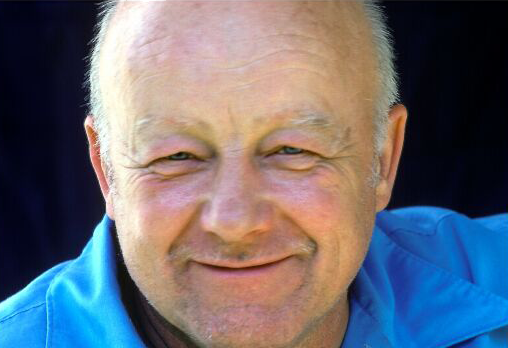
~ Thanks to B.H., and to Jaz. Mine for the image from unsplash.com. Please email reader commentary to the TAT Forum.
TAT Foundation News
It’s all about “ladder work” – helping and being helped
Richard Rose, the founder of the TAT Foundation, spent his life searching for the Truth, finding it, and helping others to find their Way. Although not well known to the public, he touched the lives of thousands of spiritual seekers through his books and lectures and through personal contacts with local study groups that continue to work with his teachings today. He felt strongly that helping others generates help for ourselves as well in our climb up the ladder to the golden find beyond the mind.
Call To Action For TAT Forum Reader
With the intention of increasing awareness of TAT’s meetings, books, and the Forum among younger serious seekers, and to increase awareness of ways to approach the search for self-definition, the TAT Foundation is now on Instagram.
You can help! A volunteer is producing shareable text-quote and video content of Richard Rose and TAT-adjacent teachers. We need your suggestions for short, provocative 1-3 sentence quotes or 1 minute or less video clips of people like Richard Rose, Art Ticknor, Bob Fergeson, Tess Hughes, Bob Cergol, Shawn Nevins, Bob Harwood, Anima Pundeer, Norio Kushi, Paul Rezendes, Paul Constant, Mike Gegenheimer & other favorites.
Please send favorite inspiring/irritating quotes—from books you have by those authors, from the TAT Forum, or any other place—to TAT quotes. If you have favorite parts of longer videos (ex: from a talk at a past TAT meeting), please email a link to the video and a timestamp.
January “TAT Talks” online event: Saturday, January 31, noon ET. April Gathering (Claymont Great Barn): Friday evening through Sunday noon, April 17-19, 2026 ** June Gathering (Claymont Mansion): Friday evening through Sunday noon, June 12-14, 2026 ** July “TAT Talks” online event: TBD. August Gathering (Claymont Mansion): Friday evening through Sunday noon, August 21-22, 2026 October “TAT Talks” online event: TBD. November Gathering (Claymont Mansion): Friday evening through Sunday noon, November 6-8, 2026 December “TAT Talks” online event: TBD.
Our in-person gatherings in 2026 will be held at the Claymont Retreat Center in Charles Town, WV.
Have you seen the TAT Foundation’s YouTube channel? Subscribe now for spiritual inspiration (and irritation)!
Volunteers have been updating the channel with hours of new content! They’ve also curated some great playlists of talks by Richard Rose, teacher talks from recent & not so recent TAT meetings, episodes of the Journals of Spiritual Discovery podcast, and other great TAT related videos from around the internet.
Featuring: Richard Rose, Bob Cergol, Shawn Nevins, Bob Fergeson, Mike Conners, Anima Pundeer, Norio Kushi, Paul Rezendes, Bob Harwood, Tess Hughes, Art Ticknor, Shawn Pethel, Tyler Matthew and other speakers.
This month’s video features “Becoming the Truth: The Story of Richard Rose & the TAT Foundation,” put together by Michael Whitely:
Local Group News
Groups with recently updated information are listed below. The complete listing of local groups is on the Find a Local Group page.
Update for the Online Self-Inquiry Book Club: We’re still looking for suggestions that have sufficient appeal. You can contact us at: https://meet.google.com/eqp-zucx-oww (ask to join).
Update from the Pittsburgh, PA self-inquiry group: > Use the e-mail link below for invitations to all meetings and to receive internal email announcements. > In-person bi-weekly meetings: our home for all future meetings is the Library of The Friend’s Meeting House in Oakland, Pittsburgh: 4836 Ellsworth Avenue, PA 15213. Current events are listed on Meetup “Pittsburgh Self-inquiry Live” and http://www.pghsig.org. – Sun, June 14, 2PM: Dean Hosts – Sun, June 28, 2PM: “Are you more than just experiences?” > Online group confrontation and individual contributions every Wed, 8:00 pm EDT via Zoom; current online events are listed on Meetup “Pittsburgh Self-inquiry Group” and http://www.pghsig.org. – Wed, June 3: Lenny S. Host: “Exploring the Depths of who we are Not” – Wed, June 10: “Is your Reality a Mirror?” – Wed, June 17: Filo Sophie King Guest – Wed, June 24: Dave Weimer Host > All Forum subscribers are welcome to join us. > Email to receive weekly topics with preparatory notes and Zoom invitations. Current events are listed on Meetup as Pittsburgh Self-inquiry Group (link above) and on Pittsburgh Self-Inquiry Live.
> We advocate self-inquiry, which is to question our beliefs and opinions of ourselves and those of others through honest and sincere feedback all in a friendly environment in order to recognize errors in our thinking and assumptions. Each participant gets an allotted time to voice their thoughts on the evening’s topic to which others can question or comment. > Our format and inspiration for self-inquiry are influenced by numerous teachers and books, none more so than the teachings of Richard Rose which can be researched here: Our format and inspiration for self-inquiry are influenced by numerous teachers and books, none more so than the teachings of Richard Rose which can be researched at TAT (Truth & Transmission) Foundation.
A password-protected section of the website is available for TAT members. (Note that there’s an occasional glitch that, when you try to link to the members-only area or a sections within it, you’ll get a page-not-found error. If you try the link a second time, it should work.) Contents include:
How you can help TAT and fellow seekers,
Audio recordings of selected sessions from 2008-and-on in-person meetings and virtual gatherings.
Resources and ideas for those planning a group spiritual retreat.
Photographs of TAT meeting facilities, the Richard Rose grave site, a rare 1979 photo, and aerial photos of the Rose farm,
Presenters’ talk notes from April TAT meetings in 2005–2007, and
TAT News Letters from 1996–2013 and Annual Retrospectives from 1973 thru 2011. The Retrospectives from 1973–1985 were written by Richard Rose and are replete with ideas on the workings of a spiritual group—rich historical content.
TAT policies, TAT business meeting notes, and other information.
New audio recordings added in May 2026:
April 2025 TAT Meeting (most of the meeting was recorded except for Bob Cergol’s session).
June 2025 TAT Meeting (partial recording).
July 2025 TAT Talk with Bob Cergol.
There were no recordings made for the August and November 2025 meetings.
All 14 issues of the TAT Journal are available in pdf format. Paperback issues of a “Forum for Awareness” were published on a quarterly basis from 1977 until 1980 and then on an annual basis until1986. The Journal’s editorial staff members, all of whom were volunteers, described the publication as a meeting place for…
Esoteric searchers, transcendentalists, mystics, scientists for the new frontiers…
People who are dedicated to the development of genuine friendship among all levels of spiritual and psychological research…
People who see the need to share ideas, but who cannot meet personally, and for those who will give support and find support while seeking a common goal…
Specialists who see the value of broadening their perspectives by association with specialists in related fields and for people who, regardless of specialty, find a value in the psychological encounters with their fellows that help them to better understand themselves and so find peace of mind and a better understanding of their friends.
As an Amazon Associate, TAT earns from qualifying purchases made through the above link or other links on our website. Click on the link and bookmark it in your browser for ease of use.
TAT has registered with the eBay Giving Works program. You can list an item there and select TAT to receive a portion of your sale. Or if you use the link and donate 100% of the proceeds to TAT, you won’t pay any seller fees when an item sells and eBay will transfer all the funds to TAT for you. Check out our Giving Works page on eBay. Click on the “For sellers” link on the left side of that page for details.
Downloadable/rental versions of the Mister Rose video and of April 2012 TAT sessions on Remembering Your True Desire:
“You don’t know anything until you know Everything….”
Mister Rose is an intimate look at a West Virginia native many people called a Zen Master because of the depth of his wisdom and the spiritual system he conveyed to his students. Profound and profane, Richard Rose was not the kind of man most people picture when they think of mystics or spiritual teachers. Yet, he was the truest of teachers, one who had “been there,” one who had the cataclysmic experience of spiritual enlightenment.
Filmed in the spring of 1991, the extraordinary documentary follows Mr. Rose from a radio interview, to a university lecture and back to his farm, as he talks about his experience, his philosophy and the details of his life.
Whether you find him charming or offensive, fatherly or fearsome, you will not forget him, and never again will you think about yourself, reality, or life after death in quite the same way.
2012 April TAT Meeting – Remembering Your True Desire
Includes all the speakers from the April 2012 TAT meeting: Art Ticknor, Bob Fergeson, Shawn Nevins and Heather Saunders.
1) Remembering Your True Desire … and Acting on It, by Art Ticknor Spiritual action is like diving for the Pearl beyond Price. What do you do when you don’t know what to do or how to do it? An informal discussion centered around the question: “What prevents effective spiritual action?”
2) Swimming in the Inner Ocean: Trips to the Beach, by Bob Fergeson A discussion of the varied ways we can use in order to hear the voice of our inner ocean, the heart of our true desires.
3) A Wider and Wilder Vision, by Shawn Nevins Notes on assumptions, beliefs, and perspectives that bind and free us.
4) Make Your Whole Life a Prayer, by Heather Saunders An intriguing look into a feeling-oriented approach to life.
TAT founder Richard Rose believed that working with others accelerates our retreat from untruth. He also felt that such efforts were most effective when applied with discernment, meaning working with others on the rungs of the ladder closest to our own. The TAT News section is for TAT members to communicate about work they’ve been doing with or for other members and friends. Please your “ladder work” news.
Humor {(h)yo͞omər}
“One thing you must be able to do in the midst of any experience is laugh. And experience should show you that it isn’t real, that it’s a movie. Life doesn’t take you seriously, so why take it seriously.” ~ Richard Rose, Carillon
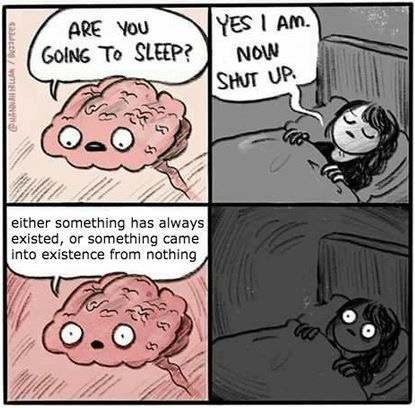
Are You Going to Sleep?
*
The original comic was created by American illustrator Hannah Hillam (see Know Your Meme).
She originally drew and published the comic on June 12, 2014, while working for BuzzFeed. You can even see her social media handle—@hannahhillam—printed vertically along the top-left edge of the first panel.
The Original Comic: In Hillam’s original comic strip, the brain asks, “Are you going to sleep?” and she replies, “Yes I am. Now shut up.” Instead of a deep philosophical paradox, the brain’s disruptive third-panel prompt is: “But think of all the ways you could get murdered.”
The Meme Template: Because the template perfectly captures late-night anxiety, it quickly became a highly viral, blank-box meme format known as “Brain Before Sleep”. Over the years, internet users have swapped out the third panel to joke about everything from programming bugs, forgotten email attachments, and random embarrassing memories, to profound existential dread like the version you shared.
~ Thanks to Michael R.
.
Destiny
During a momentous battle, a Japanese general decided to attack even though his army was greatly outnumbered. He was confident they would win, but his men were filled with doubt. On the way to the battle, they stopped at a religious shrine. After praying with the men, the general took out a coin and said, “I shall now toss this coin. If it is heads, we shall win. If tails, we shall lose. Destiny will now reveal itself.”
He threw the coin into the air and all watched intently as it landed. It was heads. The soldiers were so overjoyed and filled with confidence that they vigorously attacked the enemy and were victorious. After the battle, a lieutenant remarked to the general, “No one can change destiny.”
“Quite right,” the general replied as he showed the lieutenant the coin, which had heads on both sides.
Irritation moves us; inspiration provides a direction
Meister Eckhart
“God is not what you look at but what you look from.”
“Soul” (i.e., what we may be before birth and after death) is not individual.
“Detachment means releasing every identity, every image, even the image of oneself as a seeker.”
Q: Do you feel that supports a conclusion that one needs to give up seeking?
The video “God Is Awareness Itself – Meister Eckhart” accurately captures the core philosophical essence of Meister Eckhart’s teachings on the “ground of being” and detachment. However, it modernizes his 14th-century scholastic theology into contemporary non-dual, Advaita Vedanta-style language, stripping away specific Christian, Trinitarian, and Christological phrasing. ~ Google AI
Ramana Maharshi: The Illusion of Past Lives
Do you believe that you are not the body, which is going to die, but a soul that is not going to die? There may be some truth to that belief. But do you also believe that your soul has experienced past lives? There may not be any truth to that belief.
If we, using our dualistic mental equipment, reach a tentative conclusion that what we are is not anything that we’ve experienced (with the physical or mental senses), and if we want to label that unknown self as “a soul,” what about the possibility that a more accurate label might be “the soul” or “the ground of being” … not something individual?
The video “The Illusion of Past Lives (Ramana Maharshi Reveals the Truth)” accurately reflects the core non-dualistic (Advaita Vedanta) position of Ramana Maharshi.
However, it captures the ultimate truth he taught rather than his more complex, multi-level approach to the subject. Ramana Maharshi’s actual stance was nuanced and depended on the level of the person asking…. For seekers who could not yet grasp the non-reality of the “I,” he did not dismiss reincarnation entirely. ~ Google AI Overview
Shankaracharya: Is Everything an Illusion?
Wikipedia: “Adi Shankara (8th c. CE), also called Adi Shankaracharya), was an Indian Vedic scholar-monk, philosopher, and teacher (acharya) of Advaita Vedanta. He wrote influential commentaries on the Brahma sutras and other texts, and in recent times is often revered as the most important Indian philosopher.”
The presentation by Sri Madhusudan Sai [in the above video] accurately reflects the core tenets of Adi Shankaracharya’s Advaita Vedanta, emphasizing the non-dual reality of Brahman and the illusion of separation caused by Maya. It faithfully aligns with traditional teachings that define freedom from fear as the realization that the individual soul is identical to the universal Brahman. ~ Google AI
Nisargadatta: Nothing Else Matters
M: Of course you are the Supreme Reality! But what of it? Every grain of sand is God; to know it is important, but that is only the beginning.
Q: Well, you told me that I am the Supreme Reality. I believe you. What next is there for me to do?
M: I told you already. Discover all you are not. Body, feelings, thoughts, ideas, time, space, being and not-being, this or that – nothing concrete or abstract you can point out to is you. A mere verbal statement will not do – you may repeat a formula endlessly without any result whatsoever. You must watch yourself continuously – particularly your mind – moment by moment, missing nothing. This witnessing is essential for the separation of the self from the not-self.
Q: The witnessing – is it not my real nature?
M: For witnessing, there must be something else to witness. We are still in duality!
Q: What about witnessing the witness? Awareness of awareness?
M: Putting words together will not take you far. Go within and discover what you are not. Nothing else matters.
~ The above dialogue appears on page 27 of I Am That (complete pdf). The image of Nisargadatta is from Wikimedia.
Please your impressions of the above items.
Reader Commentary
Encouraging interactive readership among TAT members and friends
A reader wrote that what would make the Forum more interesting would be:
Hearing from people who are searching—and have questions instead of those providing endless advice and “answers.” What challenges they are facing. What their doubts and questions are. How they perceive their path is going. What they are doing in their lives. Where they think they will end up, etc., etc.
Can you help make the Forum more interesting?
The Reader Commentary question for the June TAT Forum:
Response: Not who, what. And what am I? Everything.
What would an individual who claim they are Self-Realized or enlightened explain (or discuss) to a skeptic, layman, or curious to further their interest, understanding, or knowledge?
o I would add that the explanation attempts to quench their epistemological and ontological thirst or interest.
Response: What do you believe?
Are there any real final answers?
o Is there any place to land?
o Is there anything to hold onto?
o Can one stay open?
o Is there any real permanence?
o Are the past and the future all happening at the same “time?”
o Are form and emptiness different?
o Is one more real than the other?
o Does emptiness come before form or do they co-arise?
Response: Yes and No.
It is a question of self-definition: What Are You?
Response: Silence
Has your realization permanently answered all questions and resolved all desires? Do you feel any sense of lack at all?
Response: Silence
Do you now live, function, or observe from a different place or point of view than before realization?
Response: Yes, there is the understanding that nothing is really separate on isolated from anything else.
Looking back, what would you say to your former seeker self?
Response: You are loved.
Do you feel one must first build a healthy sense of self before seeking genuine realization? What role do emotional maturity, personal development, and relationship to others play in it?
Response: Yes, it’s helpful to be emotionally mature.
Is there a relationship between becoming Truth/Love, “growing up” (developmental maturity), and “cleaning up” (shadow work)?
Response: They are the same.
Do you still experience fears and desires?
Response: These can still arise but there is ‘no one’ there to cling to them.
Before realization, did you love Truth/Freedom/God/Absolute more than anything else? If so, how do you love what you do not yet know?
Response: These were ‘loved’ as concepts to be understood.
What would you say your purpose in life was before realization? What is it now?
Response: The purpose is the same; to live life.
Does self-compassion or childlike curiosity play a role in the search, alongside trauma and suffering?
Response: Trauma is not required. But everything plays a role.
I sometimes lose my sense of “I” in moments of surprise, beauty, shock, or deep absorption—where experience unfolds but the thought “I” has not yet appeared. Is this similar to your experience some, most, or all of the time?
Response: All of the time. For me there is no separate I, only Being.
How would you describe what happened to you to a child, a teenager, and an adult?
Response: ‘Enlightenment’ happened as a child. It took most of the rest of this life to acknowledge.
Is boredom a part of your life? Or is the absence of doing / Silence a ground state of Being, never not there?
Response: Boredom is absent. Everything else arises and falls naturally.
If there was the opportunity of asking a single question, I can’t imagine any other except for “what should I do”?
Response: Just continue to Be.
What did you discover?
Response: Life is a dream. Nothing ever actually happened.
o How do you know you’re enlightened?
Response: There is no enlightenment for a ‘you’.
o What was helpful to you on your spiritual path? What was harmful to you?
Response: Friends were very helpful. Negativity was detrimental.
o Sincere spiritual seekers have a deep longing for enlightenment. What do you feel are the 3 most important tips that will help them and/or expedite their search?
Response: Do everything for love.
o What would you say to seekers that might inspire and/or irritate them?
Response: You are already that which you seek.
o What do you feel is counterproductive or destructive to seekers?
Response: Strong beliefs can be counter productive.
Are you sure it’s not another trick of the mind? Another compensation to turn from the truth?
Response: The mind is also truth.
o How does the mind know of a Self? How does the information get to the mind?
Response: Through disappearance of mind, mind knows.
o How come we have individual views? How come you Realizing doesn’t also make me Realized?
Response: Noticed how you are the only person who enters and wakes up from your dreams at night.
o Is there any truth about experience that’s important to learn? Or does none of it matter vs. knowing the experiencer?
Response: Experience is both separate from and the same as the experiencer.
o Does this experience make God happy?
Response: Does it make you happy?
o Did you learn, is love stronger than death? Why does love allow ignorance?
Response: Love is unconditional
o What should I have asked you?
Response: What you asked.
If I met a person who said they are enlightened, I would try to avoid asking about their current state. As, I won’t be able to relate to it and it has no use for me. So, I would then ask a series of questions (given that I have already provided information about my current state of mind) about my psychological self and thoughts, like my relationship to this being. Can this being live without me permanently? Because I believe suffering is mutual, do I (psychological self) have to self-annihilate or does this being have to see the mutual suffering and release me? Although, I hardly believe any quick answer will give me anything that will alter my perspective on these things.
o Moreover, I feel two-way conversation is more suitable than me dumping questions. Discussion I think will help me explore myself in real time. Discussion also invites the person to ask me questions, which can be crucial for me. In my opinion a little nudge is more helpful than giving answers.
Response: Silence.
I’ve heard more than one enlightened person say that their psychological / emotion issues and suffering was resolved before their final enlightenment experience. Richard Rose spoke about an “egoless vector” which I understand to mean a point in a spiritual search where the seeker is no longer seeking for personal concern.
o So my question to the enlightened people is: What actually changes after, if anything?
Response: Nothing and everything changes.
Questions I would ask:
o Is your innermost angst satisfied? Do you feel settled in your soul?
o Do you have unanswered questions that are important to you?
o Do desires or fears still drive your life?
Response: Silence.
I am not sure the answering of my questions by an enlightened person would help because there are so many good answers to my questions from TAT Foundation books and other books, etc.
o I have read for the last 30 plus years. It’s not so much answers I need…..it is practice.
Response: Practice is no guarantee. Be open to whatever arises whether it’s a question or a book, or something else.
o One question I would ask is: Would you spend a night with me looking at the stars from the Nullarbor Plain in the middle of Australia?
Response: Depends on circumstances.
Why do we often hear about tension being a prerequisite of, or at least strongly correlated with, Realization?
o What role does tension play, how does it work, and why is it sometimes elevated above something like “relaxing into one’s being” as a method for finding Truth?
Response: Tension can play a role as can relaxation.
What would you say that you’ve found?
o What’s your level of certainty about it?
o Why are you that certain?
Response: Because I have not found anything other than what is already here, certainty is not necessary.
I would like to ask self-realized people what they really want from working with seekers.
Response: Mutual happiness.
o Have they noticed any disadvantages in their life to being self-realized?
Response: Yes, the lack of any filters makes one more ‘vulnerable’ to life’s ups and downs.
o Did they ever have any doubts about the authenticity of their self-realization?
Response: It’s a bit like asking whether there are any doubts I am alive.
From David Weimer:
(Mike W):
It is a question of self definition – What Are You?
There’s a feeling of certainty that doesn’t go away. A grokking of the big picture.
(Mahesh I):
Q1. Has your realization permanently answered all questions and resolved all desires? Do you feel any sense of lack at all?
In the existential sense, I don’t feel a sense of lack. I used to. Permanently? So far. Thirty years.
Q2. Did you expect realization to unfold the way it did? How did it differ from what you imagined?
No. It differed in every way from what I imagined. It doesn’t matter what I imagined. A personal experience is unrelated to imagining what something would be like.
Q3. Do you now live, function, or observe from a different place or point of view than before realization?
Yes. In one big, basic, simple, profound, changeless way.
(Lena S):
If there was the opportunity of asking a single question, I can’t imagine any other except for “what should I do”?
Keep asking things that matter as much as that. Ask them of yourself, as earnestly and questioningly as you can. Pursue, strain, meditate upon, return to, pray, despair over, yearn. In your life, your earnest efforts are most important.
(Dan G):
Are you sure it’s not another trick of the mind? Another compensation to turn from the truth?
Pretty sure. A trick of the mind? It doesn’t feel related to the mind.
What should I have asked you?
Ask every single relevant question that comes to mind. Don’t stop until you’ve come to the end of things coming up. Ask for help. Ask for tips. Do this to every single “realized” person you encounter. This is more important than being polite.
(BH):
So my question to the enlightened people is: What actually changes after, if anything?
This, here, at home, is changed.
What in my life changed? I don’t know why, but the immediate aftermath was that the structure of my life avalanched. Everything crumbled. I stumbled, numb, through the rubble. Everyone’s life is unique. I would guess that a major change in anyone would contrast starkly with the life structure that was created and maintained by the earlier, still hungry, version of that person.
(Mark W):
I would like to ask self-realized people what they really want from working with seekers. Have they noticed any disadvantages in their life to being self-realized? Did they ever have any doubts about the authenticity of their self-realization?
What I really want, if possible, is to help someone who is like I used to be.
Disadvantages in my life? Probably. Being not as attached on a superficial level probably seems like uncaring to someone close to me. Just a guess.
Any doubts about the “authenticity” of my self-realization? No. It took a long time to assimilate.
Isolated in a cabin for three months, after the avalanche following my change, when re-reading books with descriptions of things and comments by spiritual authorities, I snorted. “I don’t know anything, but I know THAT.”
There are no doubts about what I feel, here. There is recognition when I encounter someone who has been beyond themselves. It’s obvious when someone hasn’t been there.
From Shawn Nevins:
There is one primary job for the spiritual seeker (or really anyone who desires to live life to the greatest potential) and that is: what is my deepest desire? Finding that, then finding various ways and means to keep that desire in the forefront, is the primary task. All else will arise from that connection.
A number of the May reader commentary questions strike me as idle curiosity. Perhaps because nearly half of them come from finders, who I presume have their deepest desire answered, so their questions don’t have the same hunger as someone on a quest. However, there were some questions and comments that caught my ear.
1: The commentator who wrote, “I feel two-way conversation is more suitable than me dumping questions.” Yes! My question to them: have you availed yourself of the opportunity for two-way conversation which TAT creates? They further commented: “In my opinion a little nudge is more helpful than giving answers.” Yes! Answers are rarely heard, in part because the questions are rarely asked with openness (meaning I am open to hearing something contrary to what I already think I know, meaning the questioner has a moment of honest desperation). Generally, a little nudge is the best that any of us can do for one another.
2: Another commenter wrote, “It’s not so much answers I need…..it is practice.” Yes, but… I maintain the practice would come naturally if you were in connection with your deepest desire. If I am drowning, I will try with all my heart to swim, but if I am thinking from the comfort of my living room that going to the pool would be a nice form of exercise, but it’s cold, or the pool is going to be crowded, blah, blah, then swimming doesn’t happen.
3: “What role does tension play, how does it work, and why is it sometimes elevated above something like ‘relaxing into one’s being’ as a method for finding Truth?” See: “The tension between being and non-being results in Enlightenment” (p. 66, Energy Transmutation, Between-ness and Transmission by Richard Rose). Further, Zen speaks of the red hot cannonball that you can neither spit out nor swallow. Then, John of the Cross says, “To arrive at being all, desire to be nothing.” These quotes all point to tension. Compare that to Rose poetically writing, “Relax ye and die and live the darkness, and enter the impassive pool of the Unknowing….” Rose is speaking of “relaxing into one’s being,” but relaxing into death is not what most people mean when they refer to that phrase. We are already THAT, but there is a barrier to feeling/knowing THAT, and the guardian of the gate is fear, tension, or myriad other rumblings of self that tell us not to go there.
4: Lastly: “Would you spend a night with me looking at the stars from the Nullarbor Plain in the middle of Australia?” I love it. See above, “live the darkness.” Let us relax and rise-fall into the night sky.
From Bob Cergol:
As I read through the surprisingly long and varied list of questions (66 questions from 15 querants) several immediate impressions arose for me.
Some questions suggested skepticism about finders and/or a possible litmus test of authenticity.
Some questions belied a sincere seeker’s mentality, hopeful of gaining better insight and guidance for their spiritual path.
Some questions seemed aimed more at showing off, either learned knowledge or intellectual cleverness.
Taken as a whole, the questions demonstrated a wide range of strongly held preconceptions and implied beliefs, or at least standardized and acceptable language regarding what an answer to searching must be and how it must be manifested in a finder.
My favorite question was a single question from a single person: What should I do?
The person who asked the question didn’t explain how they would recognize an enlightened person if they met one, and in whom they could place their trust to ask that question. Hopefully it would be some deep intuitive recognition and not blind belief based merely on reputation or hearsay, or at worst based on some cliché checklist of attributes an enlightened person must manifest, and certain crowd-pleasing language softly spoken and/or in a peacefully passive manner.
The fact is that an unenlightened person is in a very poor position to ascertain whether another person is enlightened. Furthermore, the enlightened status of another person is irrelevant to a seeker unless that seeker intuits the person can help them somehow with their seeking.
Descriptions from self-realized individuals of their realization and attendant experience vary significantly, as does the language they use to convey it, along with any advice on how to find such a final answer. Yet still, I can recognize a common thread, some deeper recognition comes through in how they say what they say. For me an excellent example of that is Bernadette Roberts, author of many books such as The Experience of No-Self. She was a Catholic Carmelite nun and insists on framing her realization in a Christian context and her advice in terms of Catholic dogma. She also claims she had, and has, zero knowledge or understanding of eastern religions and philosophy. Yet the profundity of her deep realization is apparent, befitting of any Eastern philosophy, and certainly not specific to Christianity.
We are all products of our genetics and circumstances, and we think and formulate language within the unique confines of that. Without exception, our interactions and communications with others conveys in varying measure our state of mind. This includes unconscious fears and desires, and our hidden agendas – hidden even from ourselves. An enlightened person brings to the interaction an X-factor rooted in deep, essential, direct knowledge and awareness of theirs and your common Source. This doesn’t guarantee a meaningful rapport or useful communication for the reasons already stated. But if rapport exists, then some degree of transmission is possible.
This is why I must agree with the person who asked the question that it is the only, or at least the single most important question to ask. But the answer to that question has two parts. One is highly specific to the individual asking, the other is generic to all seekers. Richard Rose spoke and wrote publicly about the latter, and the former only in group work with those near him, and in one-on-one individual interactions, both in-person and through correspondence. Rose’s public teachings are evident throughout TAT’s web site and at TAT events. His private teachings are also evident through his students who found answers and have published extensively in the TAT Forum and participated in TAT’s in-person and online meetings.
“What should I do?”
Make a commitment to find the Truth. Make it your top priority. Act on that commitment. Put your house in order (your life), to position yourself favorably towards keeping that commitment and taking such action, and minimizing obstacles to it. Determine for yourself what are the ways and means to optimally pursue your spiritual path. For sure, that will include daily meditational practice and working with others in a group of like-minded seekers. Help others as you expect to receive help. Don’t postulate the truth, abandon untruths. Practice discernment when reading books or listening to others, and most especially when looking at yourself. Develop your intuition through living an energy-conserving lifestyle with your commitment to finding the truth as the center of gravity. Go within. Know yourself. Be true to yourself. Challenge yourself and avoid practices that lull you to sleep. This may all sound generic, even a little clichéd, but doing all of this requires true commitment and acting on that commitment with urgency. Your life will become a vector away from un-truth, away from false self, and make you vulnerable to the Grace that emanates from your Source and you will be guided home. I have no doubt about it.
From Yasmin C:
How would you answer the question, ‘Who are you?”
I am the totality of what arises, the substance and the experiencing of it.
Also, I’m Yasmin, hi. 🙂
What would an individual who claim they are Self-Realized or enlightened explain (or discuss) to a skeptic, layman, or curious to further their interest, understanding, or knowledge?
I would add that the explanation attempts to quench their epistemological and ontological thirst or interest.
Who knows. It’s just theoretical speculation without a person in front of you. You have to feel your way into it, there’s no formula.
You can feel by a person’s energy whether they are open to this stuff. I wouldn’t talk about self-realization to people who aren’t interested or who have strong resistance. That covers most people, even people who are into spirituality.
If someone is open and interested, I might encourage them to get curious about their own immediate experience without getting tangled up in concepts about it. I’d try to let them know that it is entirely possible to get free of angst and existential suffering, and that this has been the case in my own experience. Beyond that it really would depend on the person and the situation.
I certainly can’t “quench [anyone’s] epistemological and ontological thirst or interest”. I can’t hand anyone the answers. They have to get to the end of their own questions.
Are there any real final answers?
Just one. But questions and answers are a function of language, and the “final answer” can’t be said. 🙂
Is there any place to land?
In mental representations, no. What do you know that is not a mental representation?
Is there anything to hold onto?
No, and no one to hold onto it.
Can one stay open?
There’s no one to open or close.
Is there any real permanence?
“Permanent” relies on the idea of time. What’s beyond these concepts?
Are the past and the future all happening at the same “time?”
Where else can they occur but now?
Are form and emptiness different?
Is one more real than the other?
Does emptiness come before form or do they co-arise?
What do you mean by form and emptiness? Is water form or is it emptiness? What about when it’s water vapor in a cloud? What about when it’s ice?
Further: where do these concepts of form and emptiness, real and unreal occur? Where do your perceptions of water, cloud and ice occur? Can you separate your knowing of these concepts/objects from the objects, do they exist independently of your perception? How could you verify whether they do or not?
Has your realization permanently answered all questions and resolved all desires? Do you feel any sense of lack at all?
The person goes on functioning, she has her daily concerns and desires. They are small and functional – they’re just concerned with keeping this organism going. It’s no big deal, even stressful circumstances are no big deal, they are just stressful circumstances. There’s no more existential angst or overarching sense of lack. Everything’s enough.
Did you expect realization to unfold the way it did? How did it differ from what you imagined?
Nothing about the process was predictable or expected, but the conceptual mind with its expectations/comparisons was not active by the time it really got underway. I wasn’t thinking about what was happening or questioning it, however weird things got (and things got weird). There was a surrender into whatever was arising in the moment, a lack of resistance – so I couldn’t stand apart and have opinions about it. It was like the distinction between the inner life and outer world dissolved and it was all one flowering.
I think this surrender into the moment and sidelining of the conceptual mind is probably a condition for realization, but I didn’t make it happen. Once the process is underway you’re just in it and it has its own momentum.
I did hear a lot of awakening stories as a seeker. What they impressed on me was that this unfolds in a completely individual way for everyone, so you have to drop your expectations. And that it can look like psychosis.
Do you now live, function, or observe from a different place or point of view than before realization?
On the one hand, nothing has changed. The seeking ends but life for the person goes on.
There are changes to the functioning of the organism – like there’s no sense of being a detached observer of life, it is all very immediate. There’s no inner life vs outer world, it’s all the one thing. There is a sense of flow that has just become normal, nothing special. (Actually these can’t really be called changes, they are ordinary perception. The sense of separation was an add-on.)
Emotions can’t be repressed anymore, but there’s not much emotion coming up. What does arise is felt and dissipates quickly. I used to be inclined to brood on some issue for weeks, but that process seems short-circuited now. My sense of time is really wonky and my memory is shot, but so far it hasn’t been a problem. The capacity for conceptual thought is reduced, my mind is just not inclined toward the abstract. The thoughts are functional and there are no social anxieties or worrying about what others might think of me – that kind of self-referential thought is absent now. The identification as the person is absent.
I find I avoid social stuff even more than I did before. I was always a hermit, but the organism’s social battery gets drained faster now, and most group situations get exhausting quicker. Loneliness went away a few years before the realization, and it doesn’t come up at all now – it doesn’t make sense without the identification as a separate entity.
The body seems to be more sensitive – or maybe the body was always sensitive but I was dissociating before. It can pick up on other people’s energy in a very direct way. This used to happen before, but there would have been a confusion about what was mine and what theirs.
I used to assume that if I became “enlightened” I would be able to fix difficult relationship dynamics, I’d know the right thing to say to magically transform the interaction. Or I’d be able to accept the other person with equanimity/compassion/love and that would fix things. What I’ve found instead is that toxicity and dysfunction are laid bare as toxicity and dysfunction. The body makes its boundaries very clear and it reacts to boundary violations as if it has been poisoned or injured. I was a great people-pleaser before, but I have had to walk away from some relationships and have better boundaries around others in order to preserve my health. This can be hard, especially if it’s family. It seems like anything inauthentic in the life is no longer tolerated, and this manifests physically for me.
The body is really the driver now. Before realization I was kinda neurotic about food and exercise, but there’s no question of forcing the body to get up and go running now like before, or to fast if it doesn’t feel like it. It eats what it feels like eating and it stops when it has had enough. It exercises when and how it feels like exercising – it does what it needs to do to keep itself in balance, and it can do this better without the mind’s involvement. I am definitely a lot less active, and if there’s nothing to be done I just do nothing. This freedom and faith in the body’s own rhythms and intelligence has been nice to discover.
There has also been a clearing-out process in the life. Things I had built an identity around have been removed, sometimes abruptly or in a way that feels synchronistic/magical. So not only am I a lot less active, I have a lot less to do.
Looking back, what would you say to your former seeker self?
“Keep going, you’re on the right track!” maybe. 🙂
Do you feel one must first build a healthy sense of self before seeking genuine realization? What role do emotional maturity, personal development, and relationship to others play in it?
Psychological work was important for me and I did a lot of it as a young person, because I was a mess. I had anorexia as an adolescent and then I was in a lot of psychological misery up until my early 30s. My path involved a lot of learning about my own patterns and family/societal conditioning. So yes, in my experience it was necessary to get stable and functional first.
There was a clear point, though, where I knew I had reached the end of the psychological work – I wasn’t “perfect” but I was OK enough, I had developed a stable center of gravity and I was no longer miserable. Life was pretty good, I was able to support myself, and my relationships with others were mostly fine. My house was pretty much in order per Rose. That’s when the spiritual seeking started to open up for me as the way forward.
It does seem to go the other way around for some people, with realization first, then the psychological work. I think there’s a greater danger of spiritual bypassing that way: using spirituality to avoid dealing with your problems. There’s also the danger of getting really ungrounded, because the awakening process is inherently destabilizing. Also, while it might be easier to do shadow work post-realization, because emotions aren’t suppressed – the impetus to work on your behaviour with others might be gone. Maybe this is what happens to the people who become abusive guru types. I really don’t know.
I would advise seekers not to avoid the psychological work, because you’re probably going to have to do it anyway. “Becoming the truth” means anything inauthentic in your life will have to change or end. You might as well be living as authentically as possible beforehand, because realization is not going to magically fix your life as a person. You will still have to live that life.
That said, you can use psychology as an avoidance tactic. You are never going to perfect the personality – you can spend the rest of your life polishing that turd (per Rose). The purpose of psychological work is to build authenticity and better functioning in the life, not to make an identity out of your issues. There’s a point where you’re OK enough.
Is there a relationship between becoming Truth/Love, “growing up” (developmental maturity), and “cleaning up” (shadow work)?
Yes, I think so. It’s all about getting real with yourself, in every aspect of your life. The outer and inner life are actually the one thing, and they have to come into alignment.
Do you still experience fears and desires?
As physical sensations in the moment yes. I feel a flash of fear as I trip and catch myself from falling. I desire a peanut butter sandwich. Fear and desire are signals the body uses to regulate itself, they exist for the maintenance of the body.
It’s not experienced as any kind of problem, just a signaling mechanism. It’s simple and natural, there is no sense of being in conflict with fear or desire.
There are no more overarching existential fears (like fear of death) or grand desires (like spiritual seeking). Things just get very basic, no abstraction.
Before realization, did you love Truth/Freedom/God/Absolute more than anything else? If so, how do you love what you do not yet know?
I wouldn’t use the word “love” but I had a sense that I was missing or overlooking something fundamental about existence – there was something hidden from me, and I was driven to find it.
I did have to exhaust different avenues of possible fulfillment in the “outer” world before getting serious with the search for Truth. I had to find out that my desire was not going to be satisfied by anything external. And near the end of the search, there was a sense of falling in love or enchantment with the flow of life, the beauty of it.
What would you say your purpose in life was before realization? What is it now?
Before realization my purpose was realization. Now I don’t have a purpose, thank goodness. What a relief to be free of that bullshit. Life as it presents itself is enough, life as it flows through this organism is enough.
Does self-compassion or childlike curiosity play a role in the search, alongside trauma and suffering?
I don’t really know what is meant by self-compassion or compassion in general, unless it’s just the acceptance of things are they are, accepting the self as it is, feeling what you feel, behaving with ordinary kindness and decency toward yourself and others. That seems so basic to me that it’s not worth making a big deal out of it.
If you have a harsh inner critic, that’s obviously some programming that is worth looking at. You didn’t come into the world like that, it was added on to you somewhere. If how you relate to yourself is cruel and punitive, the opposite of how you would treat a pet or a child – that is also worth looking at.
Childlike openness or beginner’s mind is very important, yes. You have to be able to look at your immediate experience without conceptualizations. So much of what we see is not what’s actually in front of us, but our conditioning around it – it’s nuts.
Suffering is important, yes. It drives the search for an end to suffering. I found out that my resistance to suffering– my sense that things should not be as they are – was the greater part of my suffering
Re. trauma: I’m no expert in psychology, but it seems what is meant by trauma is a somatic reaction to overwhelming abuse or shock. It’s a dissociative response that gets stuck in the body and reemerges at inappropriate times. It’s not the same as the suffering following the normal upsets and losses people have, it’s much more disabling. I don’t feel I’m qualified to talk about trauma. I don’t know how effective spirituality is at addressing it, because it seems to be really easy for traumatized people to use spiritual practices to dissociate. There are targeted therapies for it. It seems like one of those things where professional help is needed.
I sometimes lose my sense of “I” in moments of surprise, beauty, shock, or deep absorption—where experience unfolds but the thought “I” has not yet appeared. Is this similar to your experience some, most, or all of the time?
Yes, that’s how it is. I used to have that experience when playing music, it seemed like a special, remarkable state. Now it’s just normal. It doesn’t feel special anymore and it’s no longer remarked on.
There was a “high” or bliss state for a few weeks/months post-realization, after the seeing through/dropping away of the “I”. But then things got very simple and ordinary. It’s clear that “I” was always just a thought. It can still arise but it has no juice – there’s no buy-in. It’s just another thought arising, it’s functional, and it doesn’t arise much.
How would you describe what happened to you to a child, a teenager, and an adult?
I was a happy child and my first memory is of lying peacefully in my crib, morning sunlight on the ceiling and birds singing outside. By my teenage years I had acquired a lot of conditioning and I was all contorted: miserable, driven, self-hating and anorexic. I had a breakdown at 18 and a cancer diagnosis at 19, everything I’d been suppressing really came to a head for me around this time. Gradually through my 20s I learned to live in my body and in the world, and to be the person I was instead of the person I’d been expected to be. I moved abroad and did a lot of internal work, became a musician, make good friends, traveled, worked lots of different jobs. In my 30s I got more comfortable in my own skin and started to feel stable and content in my life, despite sporadic misery around romantic relationships. The spiritual path opened up in my mid 30s. I tried to avoid it for a good few years, and made a final push to have a more “normal” sort of worldly life, which mercifully failed. I was drawn back onto the path in earnest at 42; realization came at 49. Now I sit on the couch, trees shining out the window and the birds singing. Life goes on.
That’s a rough outline of the story of Yasmin. It has been circular I guess – from simplicity and contentment, through complexity and misery, back to simplicity and contentment.
Is boredom a part of your life? Or is the absence of doing / Silence a ground state of Being, never not there?
I don’t find myself bored but I sure have become very boring. And yes, silence is the ground state. Beautiful streaming forever silence, every possibility is contained in it. I don’t have a meditation practice anymore, but often the silence gets very strong and I drop into it.
If there was the opportunity of asking a single question, I can’t imagine any other except for “what should I do”?
Attend to your experience right now. Be with whatever is arising in perception, without conceptualizing about it. What you’re seeking is right here in present experience, unfiltered by thought. It can be nowhere else.
What did you discover?
I discovered that I am what I was seeking. Which was something I’d already heard a thousand times on this path and thought I understood, but I didn’t.
I could also say, I didn’t find anything, nothing was ever hidden. The restless energy of seeking (which I thought was me, but was actually an avoidance of the present moment) ended.
How do you know you’re enlightened?
I’m not a fan of the word “enlightened” as it sounds grandiose, like you have a halo or something. I believe the Buddha just said he was awake, that seems a lot more realistic. You could also call it “remembering”, because it’s what we all knew as children and it has never left us, only been obscured by our conditioning.
Whatever you want to call it, before the shift I knew clearly that I was not enlightened. I knew I was seeking, that there was something about life that I was just not understanding. There was a sense of something incomplete. I would not have claimed to be enlightened because it was obvious to me that I wasn’t.
Afterwards, even if I can’t adequately articulate what has happened, I know it has happened. Something has changed fundamentally; something has died. Further seeking would be absurd because there’s nothing to seek. The seeking and dissatisfaction are done, the existential drama of Yasmin is done.
When you’re done you know you’re done. I don’t understand it but that’s how it is. There’s no need for anyone to confirm it for you, it’s obvious.
And there’s no point being falsely humble about it, because I didn’t attain anything. In fact I can’t believe how dumb I was with all the seeking, how long it took me to see the obvious. It’s a total joke.
What was helpful to you on your spiritual path? What was harmful to you?
I was helped a lot by TAT and the resources TAT has made available to seekers. Through TAT I met my friend and teacher Tess Hughes, and then my friend and teacher Jane Kellaghan. I was helped so much by both of them, and I’m very grateful. I’m also grateful to the TAT teachers who I didn’t work with much personally, but whose teachings I’ve benefited from. Also to the other seekers in the groups I dipped in and out of, it was nice to have that feedback and friendship.
Doing psychedelics in my 20s helped me a lot. LSD in particular broke through my rigid mental defenses. An ayahuasca trip in my mid 30s led to my discovery of TAT and the spiritual path.
(I wasn’t doing anything like that near the end though, as it had long since become unnecessary. I also stopped drinking alcohol altogether the year before realization, because I didn’t like how it felt anymore. You need to have a clear mind and alcohol made that harder for me.)
Woo woo stuff like the I Ching and tarot and astrology helped to widen the aperture of intuition. I didn’t know that’s what I was doing with all my obsessive consulting of that stuff, but it was useful.
I was also helped by having a meditation practice, making music, reading poetry, dancing, going on long walks in nature, staring at moving water for hours, backpacking trips abroad, and hanging out with cats and other animals.
Writing in journals since my 20s helped, and also paying attention to dreams and synchronicities.
Having a decent bullshit detector helped, and an obsessive nature.
I don’t feel I was harmed on the path. I had so much help and whatever I needed for the next step often seemed to come along serendipitously. I was very lucky.
Silence and solitude were essential. I was lucky to have that kind of space in my life.
Some of the things that helped most seemed the most harmful: psychological breakdowns, heartbreaks, toxic relationships, illness, loss, suffering in general. I guess it all broke down my notions about myself and how my life was supposed to be.
Sincere spiritual seekers have a deep longing for enlightenment. What do you feel are the 3 most important tips that will help them and/or expedite their search?
Have some way to quiet the mind. This is about looking carefully at your own direct experience, right now. The mind has to get pretty quiet before you can start to attend to the nature of thought, sensation, subject/object and attention in the moment. I was not a great meditator, but I did have a practice for years. If you watch your thoughts arising and dissipating without getting caught by their content and you do it persistently, they do slow down over time. It’s a great relief to have a break from that hamster wheel and it allows you to attend to the here and now.
Be honest and brave. Get real with yourself in every aspect of your life, and learn to face into difficulty. Understand that this path is all about you, nobody else, and no one is ultimately gonna hold your hand or take responsibility – it’s all you. You will have to face your death, that’s where this leads, and no comforting narrative is going to save you. There’s no point in lying to yourself or whitewashing what you actually feel with affirmations or trying to uphold some idealized image of yourself. Practice facing into things that you find uncomfortable, especially your own emotions. Allow them to come up and be felt, they are just energy in the body and they need to flow. It’s good practice for dying.
Shake things up. Try approaches that are the opposite of what you’d normally do, especially ones that you have an automatic resistance to. If you live up in your head, you might need to do somatic or emotional work. If you are very body and emotion-focused, you might need to try a more logical, analytical approach. If you’re grimly focused on realization, you might need to go on a holiday or do things that bring joy and fun into your life.
I was quite intellectual, but near the end of the seeking I saw that I’d gone as far as I could with the mind, and the rest had to come via the body. The breakthrough came after doing energy/somatic work with my friend Jane K. This was something I’d really not looked into or considered as relevant, but it turned out to be very important.
And also I normally shied away from in-person retreats and group energy, but the breakthrough came during a retreat with a small group. It seems like shaking things up helped me.
What would you say to seekers that might inspire and/or irritate them?
To inspire: What you are looking for is so ridiculously simple. It’s not only possible for you to find it, it’s inevitable.
To irritate: What you are looking for is so ridiculously simple, if you have spent years or even decades seeking and not finding, it’s because you don’t actually want to find. You want your identity as a spiritual seeker, you want to debate how many angels can dance on the head of a pin with other seekers and to be seen as some kind of expert, you want the intelligent and supportive fellowship of your spiritual community, you want a lifestyle of going to retreats and feeling inspiring feelings and collecting amazing experiences. The last thing you actually want is to die into the truth. There’s nothing wrong with this, but at least be honest with yourself about it.
(I would only say the latter if I were deliberately trying to irritate or shock. But I also believe that there is a ton of conditioning and personal will that has to be worn away before the person is emptied-out enough for realization, and this takes the time it takes. Things happen when they’re ready to happen, there’s no set time.)
What do you feel is counterproductive or destructive to seekers?
-I’m so grateful for Richard Rose’s work, and for his no-bullshit communication style. I would question his stance on celibacy though. I am celibate by temperament and stage of life, but I can see how it could turn into something very punishing for the body if I were not. I feel that encouraging young people to forego relationships and sex in favor of spiritual development is wrong-headed, it can encourage avoidant behavior and spiritual bypassing. Punitive, controlling attitudes toward the body just seem pathological – the body is not some mad dog that needs to be chained up, it is a miracle.
It seems this advice was directed mostly to young men, and I don’t have a male physiology, so I might not really get what this is about.
-I also think Rose telling young people that they had to attain realization before they hit 30 or whatever was silly. I understand he was trying to motivate people, but the process takes the time it takes. The living of a normal life can wear away a lot of ego without any spiritual practice at all.
-Related, the “storming heaven” endurance-athlete approach to spirituality does not jibe with my experience. For me it has not been about conquering some mountain peak through sheer will, but learning to dance with life and allowing life to lead. It’s about surrendering into the flow. My definition of ego is mental/physical resistance to the flow, and I think it is only strengthened by all this grim effortful striving.
(But maybe the point of this approach is that it necessarily fails and exhausts the seeker, I guess it’s very clever and useful in that case.)
I think the notion that enlightenment is the only important thing in life and the answer to all problems is harmful. People should understand that it will not fix a bad marriage or hating your job and it may make things worse. It will not cure your psychological or physical issues. You still have to live your human life in the world, there’s no escape.
I think putting “enlightened people” on pedestals is harmful and can open seekers up to abuse. Enlightened people are still just people, and the person isn’t what wakes up. The person is only a bundle of conditioning – the realization might have knocked away a lot of that conditioning so the mechanism runs with less friction, but it’s still just a mechanism of cause and effect. (“Enlightened person” is an oxymoron IMO, as “enlightenment” is prior to the person – the original face before you were born, or “before Abraham was, I am”. )
Enlightened people don’t have anything you lack. It’s more like they’ve lost some things you still have. They’re not superior to you or a better authority on your own life than you – you have to become your own authority, per Rose. It’s great to have people who’ve reached the end of the path to talk to, great to have their friendship and support, but don’t project some superhuman omniscience onto them. They’re just people and they can be dumb or wrong just like anyone else.
(This was so hard for me to understand as a seeker. The distinction between the realization and the person was very confusing.)
Are you sure it’s not another trick of the mind? Another compensation to turn from the truth?
How does the mind know of a Self? How does the information get to the mind?
It’s outside of the mind altogether, so it can’t be a trick of the mind. The mind can’t know it. All the mind is, is thoughts – reflections, like reflections in water. A reflection can’t “know” anything, it can only reflect.
How come we have individual views? How come you Realizing doesn’t also make me Realized?
Are you sure we have individual views? What in your immediate experience do you base that belief on?
Where do I occur, and my big Realization that you think you lack? Where is all that happening for you right now?
Is there any truth about experience that’s important to learn? Or does none of it matter vs. knowing the experiencer?
These questions rely on assumptions that the questioner could examine. (Experience vs experiencer might be a start.)
Does this experience make God happy?
Ditto.
Did you learn, is love stronger than death? Why does love allow ignorance?
Ditto.
What should I have asked you?
“Does realization help you to answer questions based on abstractions?”
Answer: Apparently not.
-Look, this is not about replacing your notions about life with better notions. It’s about having the notions stripped away.
If I met a person who said they are enlightened, I would try to avoid asking about their current state. As, I won’t be able to relate to it and it has no use for me.
On what do you base this assumption?
So, I would then ask a series of questions (given that I have already provided information about my current state of mind) about my psychological self and thoughts, like my relationship to this being. Can this being live without me permanently? Because I believe suffering is mutual, do I (psychological self) have to self-annihilate or does this being have to see the mutual suffering and release me? Although, I hardly believe any quick answer will give me anything that will alter my perspective on these things.
I’m confused about who is relating to what here – “psychological self” vs. “this being” – what are you trying to say?
It reads like mental contortion based on beliefs and assumptions which you are seemingly unwilling to examine: “I hardly believe any quick answer will give me anything that will alter my perspective on these things”. OK, but I don’t see much clarity around what your perspective actually is. And why should I engage with you if you already think you know better?
Moreover, I feel two-way conversation is more suitable than me dumping questions. Discussion I think will help me explore myself in real time. Discussion also invites the person to ask me questions, which can be crucial for me. In my opinion a little nudge is more helpful than giving answers.
Here it sounds like you’re dictating what way you want the other to respond, what kind of interaction will be acceptable and useful to you. I’m not here to serve your ego.
My unsolicited advice to you would be to find a way to quiet your thinking mind, because it is running the show and it sounds pretty chaotic to me. Are you using thought to dissociate from your physical reality? What’s going on with the body, underneath the mental abstractions?
Also, are you aware of your need for control? You could look into that.
If you feel some indignation at my response, that’s a goldmine – that resistance is protecting something important. Find out what it is.
I’ve heard more than one enlightened person say that their psychological / emotion issues and suffering was resolved before their final enlightenment experience. Richard Rose spoke about an “egoless vector” which I understand to mean a point in a spiritual search where the seeker is no longer seeking for personal concern.
Yes, that was true for me. I was no longer suffering or having to exert discipline, the path was just doing itself. It felt like a flowering. It’s like the ox herding picture “riding the ox home”.
So my question to the enlightened people is: What actually changes after, if anything?
I hope I’ve answered this in the other responses. It’s easy to answer with a standard non-dual cliché, like “nothing and everything changes”. And that cliche is accurate! But I did try to describe changes I’ve noticed personally. I can only talk about my own experience.
Questions I would ask:
Is your innermost angst satisfied? Do you feel settled in your soul?
Yes.
Do you have unanswered questions that are important to you?
No.
Do desires or fears still drive your life?
No.
I am not sure the answering of my questions by an enlightened person would help because there are so many good answers to my questions from TAT Foundation books and other books, etc.
I have read for the last 30 plus years. It’s not so much answers I need…..it is practice.
One question I would ask is: Would you spend a night with me looking at the stars from the Nullarbor Plain in the middle of Australia?
Sounds lovely. 🙂
Why do we often hear about tension being a prerequisite of, or at least strongly correlated with, Realization?
What role does tension play, how does it work, and why is it sometimes elevated above something like “relaxing into one’s being” as a method for finding Truth?
I guess different things work for different people, and tension worked for Rose. I doubt he built up tension as a seeker on purpose – he was probably just intense, as many of us are who get into this stuff. Then maybe he saw it as crucial afterwards. I don’t know.
Some people talk about contraction, I think it’s the same thing. Realization is the end of that tension/contraction. You just can’t clench up like that again, physically or mentally.
You can’t have tension without relaxation, one means nothing without the other. You can’t have contraction without release. You can’t have seeking without finding. It seems to me that Rose’s approach leaned more toward ramping up the tension, ramping up the contraction, ramping up the seeking – leading to a big failure and release, like what happened to him. The purpose of building tension is to exhaust that tension, the way a koan exhausts the conceptual mind.
I see it as a very male warrior approach, and hard on the organism. Basically pushing yourself to breaking point to get a breakthrough. Maybe this is why Rose encouraged celibacy – more buildup of internal tension, so you can have a big explosive head orgasm.
It might work for others but it wasn’t right for me. But looking back, I guess I built and exhausted a great deal of tension via rigidity and then mental/physical collapse as a young person. I wasn’t physically able to ramp up tension after that.
What would you say that you’ve found?
What it was never possible to lose.
What’s your level of certainty about it?
Complete.
Why are you that certain?
Fucked if I know! 🙂
I would like to ask self-realized people what they really want from working with seekers.
That’s a good question. I don’t have any delusion that I can rescue anybody from their suffering, but the orientation toward being helpful is still there. I was helped a great deal along the way, and I made a promise before realization that I would help others along the path as much as I could. It makes sense to pay it back.
There’s no inclination to put myself out there as a teacher though. Life will use me as it sees fit.
Jane K. said to me once that maybe the reason there are so many non-duality teachers online now (aside from there’s money in it) is that teaching and engagement help them to feel something. They get to re-live the initial bliss of the realization through talking about it or seeing their students have breakthroughs. Otherwise life gets very matter-of-fact and ordinary – she called it “emotional flatline”.
That makes sense to me. I mean, I am so boring now. I can actually sit on the couch all day. I’m less than 2 years post-realization and I barely think about any of it, and when an emotion comes up it’s like seeing a rare bird. My inclination is to engage less and less with others.
But writing responses to these questions has been very intellectually engaging – I found it fun. I talk to so few people about this stuff. It has been really interesting finding out what I have to say – obviously a LOT! So thank you guys for the questions. I hope others find something useful in all this verbiage.
Have they noticed any disadvantages in their life to being self-realized?
There are changes but you adapt. There’s no way I would go back.
Did they ever have any doubts about the authenticity of their self-realization?
No, it’s interesting, considering how skeptical my mind can be.
Doubting it would be a mental thing. But the realization isn’t mental, it isn’t about thought. So if doubtful thoughts were arising I would know them to be only thoughts, and of no relevance. But as it happens, they do not arise.
From Art Ticknor:
How would you answer the question, ‘Who are you?”
“Who” I am is the conscious entity, which comes and goes, that you and I experience.
“What” I am is unchanging, nonindividual is-ness.
—–
What would an individual who claim they are Self-Realized or enlightened explain (or discuss) to a skeptic, layman, or curious to further their interest, understanding, or knowledge?
I would add that the explanation attempts to quench their epistemological and ontological thirst or interest.
Could be anything or nothing.
—–
Are there any real final answers?
Yes.
Is there any place to land?
Yes.
Is there anything to hold onto?
Conviction (which can be challenged).
Can one stay open?
Things change. Nothingness doesn’t.
Is there any real permanence?
Yes.
Are the past and the future all happening at the same “time?”
No.
Are form and emptiness different?
Yes.
Is one more real than the other?
No.
Does emptiness come before form or do they co-arise?
Nothingness is anterior to thingness.
—–
It is a question of self-definition: What Are You?
“What” I am is the absolute state of is-ness at the center of being, which is unchanging, that is not seen out/down here.
—–
Has your realization permanently answered all questions and resolved all desires? Do you feel any sense of lack at all?
Realization answers the questions of what we are, have always been, and always will be … unchanging … complete. Fears and desires don’t operate at the core
—–
Did you expect realization to unfold the way it did? How did it differ from what you imagined?
I didn’t have any idea about how it would unfold. The only conviction I had was that it wouldn’t occur when other people were around … which turned out to be the case.
—–
Do you now live, function, or observe from a different place or point of view than before realization?
Living/existence is something that comes and goes, which is captured by the Latin etymology of ex- plus sistere, to stand outside of [the center]. Art’s consciousness returned here from its source after Realization.
—–
Looking back, what would you say to your former seeker self?
Probably nothing unless it asked.
—–
Do you feel one must first build a healthy sense of self before seeking genuine realization? What role do emotional maturity, personal development, and relationship to others play in it?
I think what’s critical is getting a clear conviction of what’s most important to you and then establishing habits that remind you every day.
—–
Is there a relationship between becoming Truth/Love, “growing up” (developmental maturity), and “cleaning up” (shadow work)?
My feeling: what it takes is sufficient life-experience to weaken the arch of our faulty self-beliefs / identity and then a final experience that drops the keystone in the arch, giving the conscious ray a break from being hypnotized by the spacetime cosmos.
—–
Do you still experience fears and desires?
Yes.
—–
Before realization, did you love Truth/Freedom/God/Absolute more than anything else? If so, how do you love what you do not yet know?
I most loved comfort and my children. I was committed to becoming the Truth, which I had seen / intuited as what I wanted most from life.
—–
What would you say your purpose in life was before realization? What is it now?
To become the Truth and work with others who have a similar direction.
—–
Does self-compassion or childlike curiosity play a role in the search, alongside trauma and suffering?
All life-experience arguably plays a helper role.
—–
I sometimes lose my sense of “I” in moments of surprise, beauty, shock, or deep absorption—where experience unfolds but the thought “I” has not yet appeared. Is this similar to your experience some, most, or all of the time?
The sense of self is an experience, something that comes and goes. What we are doesn’t.
—–
How would you describe what happened to you to a child, a teenager, and an adult?
My life before meeting Richard Rose at age 33 was one of unconscious seeking; afterward, it led to 26 years of conscious seeking: about 10 hopeful years followed by half a dozen hopeless ones then another 10 of “neutral” ones (neither hopeful or hopeless).
—–
Is boredom a part of your life? Or is the absence of doing / Silence a ground state of Being, never not there?
My post-realization existence would look much like pre-realization from a 3rd-person view. I’d say that my initial reactions are pretty much the same as before, but secondary reactions to the primary reactions don’t have as much emotional-cramp activity. A great difference is the conviction now that what I experience has no effect on what I am.
—–
If there was the opportunity of asking a single question, I can’t imagine any other except for “what should I do”?
“Shoulds” are an iffy game. Doing comes from wanting. A primary question is “What do I want?” The primary question is “What do I want most?”
—–
What did you discover?
What I am.
How do you know you’re enlightened?
Conviction in memory of seeing and recognizing my true identity, and in the change it caused to my state of mind.
What was helpful to you on your spiritual path? What was harmful to you?
Many suggestions from Richard Rose and two suggestions in particular from Douglas Harding stand out. Life-experience in general, but interpretations of any one in particular are questionable.
Sincere spiritual seekers have a deep longing for enlightenment. What do you feel are the 3 most important tips that will help them and/or expedite their search?
The commitment that derives from seeing clearly what they want most from life. Daily effort. Working for an ideal, not for their personality or individuality.
What would you say to seekers that might inspire and/or irritate them?
Lots of questioning; sparse praise.
What do you feel is counterproductive or destructive to seekers?
Adopting beliefs from authority figures/sources, peer pressure, etc.
—–
Are you sure it’s not another trick of the mind? Another compensation to turn from the truth?
I’m open to challenges from life-experience.
How does the mind know of a Self? How does the information get to the mind?
Seems to me like the conscious ray of manifestation somehow bends back to its source.
How come we have individual views? How come you Realizing doesn’t also make me Realized?
Maybe explained by the difference between Newtonian physics and quantum physics; also by the Indra’s Net metaphor.
Is there any truth about experience that’s important to learn? Or does none of it matter vs. knowing the experiencer?
Experience provides the data that the mind works with.
Does this experience make God happy?
No.
Did you learn, is love stronger than death? Why does love allow ignorance?
Love is a variety of experiences. I haven’t yet experienced physical death.
What should I have asked you?
Anything you want to hide.
—–
If I met a person who said they are enlightened, I would try to avoid asking about their current state. As, I won’t be able to relate to it and it has no use for me. So, I would then ask a series of questions (given that I have already provided information about my current state of mind) about my psychological self and thoughts, like my relationship to this being. Can this being live without me permanently? Because I believe suffering is mutual, do I (psychological self) have to self-annihilate or does this being have to see the mutual suffering and release me? Although, I hardly believe any quick answer will give me anything that will alter my perspective on these things.
Moreover, I feel two-way conversation is more suitable than me dumping questions. Discussion I think will help me explore myself in real time. Discussion also invites the person to ask me questions, which can be crucial for me. In my opinion a little nudge is more helpful than giving answers.
Being, which we don’t experience until we find ourselves back at the source, is permanent. Life is impermanent.
—–
I’ve heard more than one enlightened person say that their psychological / emotion issues and suffering was resolved before their final enlightenment experience. Richard Rose spoke about an “egoless vector” which I understand to mean a point in a spiritual search where the seeker is no longer seeking for personal concern.
I think life shortly before Self-Realization could be more or less traumatic … earthquakes versus erosions.
So my question to the enlightened people is: What actually changes after, if anything?
Self-Realization changes the conscious ray’s state of mind. Some convictions will change, and weightings of the various fears and desires will change.
—–
Questions I would ask:
Is your innermost angst satisfied? Do you feel settled in your soul?
Definitely. Ditto.
Do you have unanswered questions that are important to you?
I have questions that are important to me (like how can I help X with Y, how can I minimize the risk of hurting vs. helping, and how does associative memory work), but none that bother me.
Do desires or fears still drive your life?
Fears and desires are participants in all decisions that precede action (all except autonomic actions, maybe). I also suspect that many of my actions are based on memories of past decision-making … like looking for traffic before crossing a street.
—–
I am not sure the answering of my questions by an enlightened person would help because there are so many good answers to my questions from TAT Foundation books and other books, etc.
I have read for the last 30 plus years. It’s not so much answers I need…..it is practice.
One question I would ask is: Would you spend a night with me looking at the stars from the Nullarbor Plain in the middle of Australia?
Possibly, but it’s not something I’d plan. I feel that the most productive life-experience is that which challenges the seeker’s certainties (assumption/beliefs/conclusions) about what they are.
—–
Why do we often hear about tension being a prerequisite of, or at least strongly correlated with, Realization?
What role does tension play, how does it work, and why is it sometimes elevated above something like “relaxing into one’s being” as a method for finding Truth?
I think of tension as a tug of war between opposing forces. And I lean strongly toward the bias that a loosening of certainties (which may or may not produce more tension) is what moves the seeker toward final resolution.
—–
What would you say that you’ve found?
Reality. Certainty. Truth. Self.
What’s your level of certainty about it?
Absolute.
Why are you that certain?
Memory that hasn’t been challenged. (BTW, I had provided these three questions 🙂
—–
I would like to ask self-realized people what they really want from working with seekers.
I guess it’s the way to keep serving the “master” ideal I intuited that I was here for.
Have they noticed any disadvantages in their life to being self-realized?
No.
Did they ever have any doubts about the authenticity of their self-realization?
Not yet.
From Jane K:
How would you answer the question, “Who are you?”
I am all that arises in the present moment.
What would someone who claims to be self-realized or enlightened say to a skeptic, layperson, or curious seeker?
There is little to discuss with a skeptic. The deeper question is: Why do they seek understanding? Is it for entertainment, comfort, relief from suffering, or from a genuine commitment to awakening to Truth and becoming fully present to what is?
Any sincere explanation ultimately points toward quenching an epistemological and ontological thirst the longing to know what is true and what we truly are.
Are there any final answers?
Is there any place to land?
Only the present moment standing in sober contact with reality.
Is there anything to hold onto?
Only the present moment.
Can one remain open?
Yes, to whatever is arising now.
Is there any real permanence?
Only what is arising in immediate experience.
Are the past and future happening at the same “time”?
Yes.
Are form and emptiness different?
Form arises within immediate experience.
Is one more real than the other?
Does emptiness come before form, or do they co-arise?
They coexist in what is arising now. I experience emptiness, and I experience form, such as the keyboard I am typing on. Both are simply happening in this moment.
What are you?
For much of my spiritual search, I explored and wrote about my self-definition. I noticed what I was writing was constantly changing, and I realized that whatever changes cannot be ultimate truth. This revealed how distorted and unstable my sense of self had been.
That inquiry became deeply valuable because it showed me where my attention was focused throughout the process of seeking.
Now my self-definition is simply: I am.
Has realization resolved all questions and desires?
I have no more existential questions. The seeker in me has died.
Desires still arises, but no longer defines my happiness. For example, I may desire to go into the ocean, but if it does not happen, it doesn’t matter.
There is no longer any sense of lack. Even if I experience something uncomfortable in the moment there will be a momentary contraction that arises as a physical sensation in the body and it will express itself energetically but there isn’t a programme running that it sticks to.
Did realization unfold the way you expected?
Not at all. I never imagined it would be so simple so ordinary.
For days afterward, I could not stop laughing because I felt like a small child rediscovering something I had always known. A sentence kept repeating in my mind:
“I know this place. I have always known this place.”
The seeker in me had overcomplicated and mystified everything. When realization occurred, the absurdity of all that striving became obvious.
Do you now live from a different perspective?
Yes. Everything that arises in the moment is all there is.
What would you say to your former seeker self?
Relax. Surrender. Allow everything as it is. Practice self-compassion. There is no perfection, no fixing, no ultimate right or wrong, only what is. Return repeatedly to the observing position. Notice thoughts and emotions without becoming entangled in them. Meet everything with complete acceptance. Stop feeding the conditioned mind. It is insatiable and will keep you trapped in endless loops as long as you continue identifying with it.
What role does emotional maturity and personal development play in realization?
Radical honesty is essential. Examine everything carefully. Allow yourself to feel fully. Live from the heart. Emotional stability matters greatly. Every disturbance can become an invitation to deeper inquiry: “What am I not seeing?”
Difficult experiences reveal hidden beliefs and patterns that keep consciousness contracted.
Is there a relationship between Truth, maturity, and shadow work?
Yes. In my experience, awakening is a maturation into one’s natural adult being.
Shadow work can help illuminate the unconscious patterns and identifications that keeps one trapped. It supports radical honesty about where attention is fixated and how that fixation obstructs spiritual unfolding.
Do fears and desires still arise?
Yes, but they no longer matter. Preferences still exist, but joy is no longer dependent upon whether those preferences are fulfilled. Fear may arise briefly, like an animal startled by a sudden sound but it passes quickly. Overwhelm may arise at times, yet it moves through the system without becoming identity.
When conditioning appears, there is mostly curiosity: “Oh, look at that.” It is immediate and so obvious. The personality still responds as the unique expression of this organism.
Before realization, did you love Truth more than anything else?
Yes. I desperately wanted an end to suffering and longed to awaken.
I could feel the peace, joy, and emptiness radiating from those who were already awake, and I wanted to know the truth they were living from more than anything.
What was your purpose before realization? What is it now?
Before realization, my purpose was awakening and freedom from existential suffering.
Now there is no fixed meaning or purpose only living fully, openly, and wholeheartedly in each moment as it unfolds. Responding to everything as it is.
Does self-compassion and childlike curiosity matter?
Yes.
How would you explain your life as a child, teenager, or adult?
Life is simply. Life is as it is (as a child, as a teenager or adult) there is no meaning to any of it. Just life expressing itself.
Is boredom part of your life?
Boredom still arises, but it no longer matters. It is amusing.
Silence is beautiful. I loved silence as a seeker. Before awakening, doing was often a way of avoiding. Now doing simply happens as needed.
What should someone do?
Allow everything that arises in each moment with full attention, acceptance, and permission.
How do you know you are enlightened?
The best way I can describe it is this: what I experienced as the “observer” and the “third eye” integrated completely. I can no longer “pull back” into observation because life is now experienced directly as the observer itself.
The existential contraction is gone. The sense of being a broken, separate self that needed fixing has dissolved. There is love for everything that arises. Life is experienced from the heart, in direct communion with the immediacy of Now. Good, bad, indifferent they are all the same.
There is no sense of an inside or outside, just open expansion. Everything is beautifully imperfect including this organism and deeply loved as it is.
What was helpful on the spiritual path?
Stability
Honest self-inquiry
The generosity of awakened teachers
Vulnerability
Emotional openness
Noticing how ego reasserts itself repeatedly
Remaining in the observing position
Meeting all experience with integrity and acceptance
What are the most important pointers for sincere seekers?
Do not endlessly repeat practices that are no longer effective.
Allow everything exactly as it is.
Strengthen the observing position.
Be radically honest about egoic tendencies.
Take nothing personally.
Listen to the body.
Spend time alone and in silence.
Quiet the compulsive doer.
Find trustworthy spiritual guidance.
Preserve your energy.
Make Truth your highest priority.
Be discerning and become your own authority.
Love all your imperfections.
The ego can enter through every possible back doorway. Every individual must examine their own blind spots carefully. Be alert.
What is counterproductive for seekers?
Endless intellectualizing
Over-analysis
Repetitive mental looping
Identification with victimhood
Attachment to spiritual identity
A useful question is: “Am I polishing the turd?”
Is enlightenment just another trick of the mind?
No
Is there a self?
There is no permanent self only conditioned habits, beliefs, and behavioural patterns.
Why do individuals appear separate?
Each person is a unique expression of life. Many people may not truly want Truth as much as they believe they do. The ego often prefers familiarity over surrender.
What matters most?
Only this present moment, met with full acceptance.
What actually changes after realization?
Everything and nothing. Life goes on with all its up’s and down’s but there is just an experience of what is happening in each moment with full acceptance of all that is as it is. All is welcome.
Is existential angst resolved?
Yes.
Are there important unanswered questions?
No.
Do fears and desires still drive life?
No. either may arise, but it doesn’t matter, no meaning is attached to either.
Why is tension often associated with realization?
Because intense tension can shock a person out of deeply conditioned patterns and identifications. Truth is not found as an object, one becomes Truth by surrendering fully to immediate experience.
What have you found?
Nothing and everything. There is nothing to acquire. One simply returns to one’s natural state, prior to distortion and identification.
How certain are you? Completely. Why? Because: “I am.”
What do self-realized people want from working with seekers?
Many seekers unconsciously love being seekers. They become attached to spiritual identity, complexity, and suffering because these feel familiar and safe. The real question is:
“Do you truly want to wake up?”
Sometimes working with a seeker that is open and has genuine hunger for truth beyond all else and has the courage to face everything head on can give rise to a feeling of bliss, expansion and pure love in me. Equally working with a person who is cemented and has concrete ideas and fixation about life, themselves and have everything figured out with an ego that is hard to shift gives rise to a feeling of pulling teeth. There is no ‘want’ in either example.
Are there disadvantages to realization? No.
Were there doubts about its authenticity? No.
From Bob Harwood:
If someone asked me, “Who are you?” I would answer, “I am that which asked the question.”
Are there any real final answers? Yes. Two of the most important are (1) Reality is NOT what people think it is, and (2) humans are NOT who they think they are.
Is there any place to land? Yes, but it’s not really a landing as much as discovering that what we already are, and always have been, is THIS, the unified infinite field of all being.
What are you? I am THIS/Reality/The Infinite Field of all Being momentarily manifesting as a body/mind organism.
Has your realization permanently answered all questions and resolved all desires? Yes. Do you feel any sense of lack at all? No.
Do you now live, function, or observe from a different POV than before realization? Absolutely!
Looking back, what would you say to your former seeker self? Seek and keep seeking until you find what you’re looking for because what you’re looking for is worth more than anything else in life.
Do you still experience fears and desires? No.
What would you say your purpose in life was before realization? Finding answers to all of my existential questions. What is it now? Writing answers to these questions.
I sometimes lose my sense of “I” in moments of deep absorption. Is this similar to your experience some, most, or all of the time? The sense of being a separate volitional entity (SVE), or being “a little person inside the head” controlling what the body does, completely ended 26 years ago, and it never came back. Afterwards, the sense of “me” was of a body/mind organism that lives in what some of us call “the natural state” –a state of being and feeling one with what is.
Is boredom a part of your life? Definitely not.
If someone asked me, “What should I do?” my response would be, “(1) Whatever you are doing now is what THIS is doing, so just watch what’s happening, (2) Seek until you find THIS, and (3) You can’t make a mistake because who you think you are is NOT who you are, and what you are is THIS unfolding perfectly in accordance with divine Will.”
What did you discover? “I” never discovered anything. THIS, in the form of a particular human, discovered ITSELF.
How does a mind know of a Self? A mind, as intellect, never knows anything important until something deeper than the intellect reveals the truth. Realizations from that deeper level of mind inform the intellect about what is NOT so (false ideas ABOUT reality), and kensho events (CC’s) can result in a direct apprehension of the Infinite. Only in those ways does the intellect ever know anything about the absolute. Only the Absolute can know the Absolute, so a human must cease to be separate from the Absolute to know the Absolute.
Can one live without a sense of being a separate volitional entity? Yes, and without the conventional sense of “me,” life is enormously more enjoyable because there is no suffering, no desires, and no expectations coupled with tremendous gratitude for the gift of life. It is like falling in love with the Absolute.
What actually changes after realizing what’s going on? An end to seeking and too many other things to list.
What would you say that you’ve found? What everyone and everything is–THIS/Self/The Absolute
What’s your level of certainty? 100%
Why are you that certain? The truth, when discovered, is self-validating and beyond doubt.
What do you really want from working with seekers? Nothing at all. After finding a priceless treasure, it’s fun helping other people find that same treasure.
Have you ever noticed any disadvantages in life after finding what you were searching for? None whatsoever.
=> The Reader Commentary question for next month, the July 2026 TAT Forum, comes from Phil C:
What are the hallmarks of a good spiritual teacher?
Please your response by the 25th of June, and indicate your preferred identification (the default is your first name and the initial letter of your last name). “Anonymous” and pen names are fine, too.
PS: What question(s) would you like to ask other TAT Forum readers?
Q for all: What are your thoughts on this month’s reader commentary? Please your feedback.
Richard Rose described a spiritual path as living one’s life aimed at finding the meaning of that life. Did you find anything relevant to your life or search in this month’s TAT Forum?
Iceland. 2025 photo by Michael R.
We like hearing from you! Please email your comments, suggestions, inquiries, and submissions.
Sign up for notices of TAT’s four annual events, other virtual events, and free monthly Forums on our contact page.
Founder’s Wisdom
Richard Rose (1917-2005) established the TAT Foundation in 1973 to encourage people to work together on what he considered to be the “grand project” of spiritual work.
And I came to the conclusion that our whole observation process is erratic, and let me see if I can take you through it. Our scientific world is based upon matter; and this materialistic or matter-philosophy is based upon measurement – measurement of matter with matter.9 In other words, if we want to measure a foot, which we divide into twelve inches, we use a thing called a ruler, and somebody has to make the ruler. Along with this, we find out that there are limitations in our science itself – and this has been noted by others besides myself: Chilton-Pearce10 was one, and Thomas Kuhn.11 In Ornstein’s book12,13 he talks about the duality of the mind; he splits the mind in half, one hemisphere of the brain being a subjective dream-type side, which he calls the “dancer”, and the other being the logical side. In this book he brings out that we don’t have much of a language in science. We have what we call agreement; that basically, everything is tentative. We have a tentative agreement, even in such very strict disciplines as mathematics and chemistry.
We find in mathematics that there’s a certain philosophy given that more or less throws all mathematics in jeopardy. I have cited the case that when I was majoring in chemistry forty years ago we had ninety-two elements14 – and we had the fiat along with it that there would be no more: Man had dissolved the universe in a test tube and there would only be ninety-two elements. Our whole universe was composed of ninety-two parts, and now all we had to do was go to work on those ninety-two and find out the real nature of the universe. Since then of course in our atomic chart we’ve got over one hundred elements. The agreement has changed. The agreement changed on oxygen from phlogiston;15 the scientists who were venerated two hundred years ago believed in a substance called phlogiston, and it evolved into oxygen.
And we’re inclined when we go into a classroom to take anything as law that’s put into a scientific textbook. Because the average student doesn’t have time to disprove it, although he may have intuition enough to sense that everything is not as proven as the author of the book would like to have him think. Now, what I’m getting at – this is a very important point – is that our understanding of the universe is an agreement, and that is all. We have measured matter with matter.
Now what is the definition of these? And what is the purpose of a definition? A definition is the description of something relative to something that it is not. It’s a comparison of opposites, not a comparison of similarities. We don’t say that bread is bread; we don’t say that a cat is a cat. We say that a cat is not everything that is not a cat. In other words, we use all sorts of terminology that relates to almost the rest of the dictionary, to bring us around to the fact that a cat is just something that is not everything else. Now if you analyze the definition of everything else, this is what it gets down to, that we don’t have any clear-cut definition of things except in relation to each other. We are only relatives; we are only measuring our degree of relation and agreement.
Now what’s wrong with this? What’s wrong with it is basically that in order to understand matter, I maintain you will have to be removed from matter and define it from an outside category. We can define an apple in terms of a pear, or by genus and specie, but when you take matter itself and start to define it in terms of matter, you can’t do it. And who is going to do it except the psychic? – somebody outside that dimension. So the person possibly from a deep spiritual experience may give you a better definition of the universe, the construction of the universe, by virtue of being the only person able to define it properly, because he’s outside.
The mind
Now here you get into a mental world. You start watching the mind, and the mind becomes tangible and objective – as soon as anything is observable it is objective. And we can’t get beyond it by our relative, tangible, objective method of studying the mind. We can do it for awhile – we can isolate, we can retreat from it, we can observe, and watch the process of observing, and write books and books on psychological observations. But we’re stuck, because we’re defining the mind with the mind, which is equally as fallacious as describing matter with matter. So we somehow have to step outside the mind. All of your works of psychology, no matter how many centuries they’re indulged in, will not bring us an understanding of the mind until we get behind it, or get beyond it.
In other words we are only able to describe it in agreement, and that’s unfortunately where all psychology is today, the same as all your material sciences, only it’s worse. Because the people with a political aim or who wish to be funded for various social services control a lot of it, and it’s a worse situation.16 I consider psychology as the new religion, the religion that has supplanted the old conventional religions possibly, that were destroyed by their own superstitions. But now we’ve got a new religion and a new set of superstitions that will be more tyrannical, and are more tyrannical. Where one sent you to the stake, the other can send you to the nuthouse, or can execute you or testify before a jury that you’re sane and responsible for your acts – and no human being is responsible for his acts.
_____
16 April 6, 1978 Meeting in Pittsburgh: “Yes sir, this stuff doesn’t happen by accident, it comes from Washington. All these big moves come from Washington.”
But anyhow, we encounter this introspection in mysticism, we encounter it in psychology; and I maintain that you can find yourself through this self-analysis. When we talk about self-analysis we’re talking about the highest form of psychology. Anybody can compare inkblots, anybody can stick pins, get reflexes and reactions, and map charts on how many people jerk to the left and how many jerk to the right, and form a behavioristic psychology. But how many people know what the mind is? I challenged the psychiatrists – we had a Chautauqua down at the farm and some came to the Chautauqua – and I have challenged every one of them I ever met to give me a definition of thought, give me a definition of mind, outside of a loose agreement. I read one book where they say the mind is a loose collective personality – but then we’ve got to define personality, and it just turns around to be anything you wish it to be. You even say a man thinks or a man wishes – but what’s a thought? what’s a wish? And yet these people can pump you full of counter-drugs, thought-drugs.
But getting back to this – we’re not interested in the machinations too much, except that there are some mechanics running around who can destroy the machinery.
The thing is that we’re trying to get behind the human mind. And the only hope that you have is for some mechanism by which you can get behind it. Now I’ve outlined something that will take you to a point where your head stops. And up until now what I said may have been very reasonable to you, but the rest is experience. When you reach a certain point in this self-analysis your head will stop and a phenomenon occurs. The phenomenon is the knowledge of nothing.
When you start looking at the mind with the mind intently you reach an intense frustration. When you start watching all of your actions clear from the sensory impulses and perceptions up to the very complex process analyses, you become more and more despairing or frustrated – finally to a point when it seems like you’re just inclined to say it’s hopeless. I went through that myself, where I just thought, “I can’t get beyond this; this whole thing’s hopeless.” But some urge that stimulates you, or prompts you, some bullheadedness or some tenacity in you to keep on plugging away at this, may bring you to a point of what I call an explosion. And this is when it’s no longer the mind, but the awareness that is in the front. The simple awareness is out front.17
Now when this experience passes, of course, you will try to verbalize. You go back to the relative dimension of speech and you’ll try to verbalize what you’ve experienced, and it’s very difficult. And the result is that when you read books, from accounts, unless you’ve had the experience yourself you’ll consider most of them a bunch of liars or people who were hysterical, or who were seeing from quite a few different viewpoints. The truth of the matter is that this is just the result of the difficulty of words, a person trying to verbalize an absolute experience or an absolute type of experience. And each one will verbalize it with the personality he had before and with the language and vocabulary that he had before, and perhaps the philosophy he had before. So that a John of the Cross18 will have a Christian experience, and a Chinese philosopher may have a Buddhistic experience, or tie it to Buddhism. It doesn’t matter. The thing is that it’s internal. But his words may be different when he describes it.
There’s another thing you’ll see, let’s say as your perspective broadens. As soon as you start watching the umpire you’ll become a trifle indignant. And I think that you might be able to measure religions or philosophic movements by how far they went in their self-analyses. Some religions reach a point in which they do nothing but denounce the umpire, or denounce the inabilities of the umpire. And they call this the devil; the umpire seems to be the devil. The umpire neglects to properly take care of the person. So the word evil or devil is chosen to lay the blame and start a battle. Because it’s evident that people wanting to get off the hook want to do some type of battle, and we have to have an adversary to do battle, so we create one.
After you watch this umpire for awhile and realize that it’s just a programming that nature put in you to keep you alive long enough to reproduce – then it’s no longer a devil. And what I mean is that this umpire is basically here exactly for that purpose. For instance a person getting into sex too young – there’s an instinct in mankind against that, at least in this country up until the last twenty or thirty years. We’ve lost all our survival instincts I think on that line. I think the tendency now would be to educate children on sex starting in the first grade, so that by the time they’re twelve they’ll be so completely debauched they won’t have any drive left to go out and rape anybody or get in trouble. But the whole purpose is simple: if you have a farm you don’t let your heifers in with the bull. It’s not a question of elitism or fear or prudishness. If you want to raise healthy cows you keep the heifers away from the bull until they’re two years old. And if you want to raise human heifers that are healthy and productive, you keep them away from the bull until they’re fifteen or eighteen years of age, or you’ll have runts.19 It takes a certain amount of time to produce a healthy creature. And you can’t say, “Well, they did it at fifteen, let’s try it fourteen. They did it a fourteen, let’s try thirteen. It didn’t seem to hurt at thirteen, let’s go back to twelve.”
So what it basically amounts to is that there are certain fears and certain antagonisms in human beings. Now some of these are for each other: jealousy and that sort of thing. But legislation is put down to preserve the body so that it can properly reproduce, and not only reproduce but to support the child. So that if a guy’s bombed out of his head to a point where he can’t keep a job, he can’t support a child – he’s an enemy of nature. Now this is basic, somatic, natural psychology. You’re no blasted good if you can’t support your children. You shouldn’t reproduce if you can’t support your children. There’s not an indefinite entity called the establishment or the country or the government that should support all the children that all the dishrags would like to produce.
So this is built in by whatever you want to call it: God or the engineer, or the automatic blueprint that was put into the human being – as in all the animals; we’re just a little bit more egotistical form of flesh. But the blueprint is in there. This voice, the umpire, is there to say, “Hey, don’t eat too much, you’ll blow your gut and you’ll not reproduce tomorrow,” – or you’ll get so fat that you won’t be able to, or you’ll get some disease, your heart will get bad and you’ll be inclined to have a heart attack and you won’t be able to raise your kids.
Did you enjoy the Forum? Then buy the book! Readers’ favorite selections from seven years of issues. Beyond Mind, Beyond Death is available at Amazon.com.
Our free monthly newsletter with essays, poems, and reader commentary· Sign up today and get an excerpt from one of our newest publications: Hope! Life's Calling.

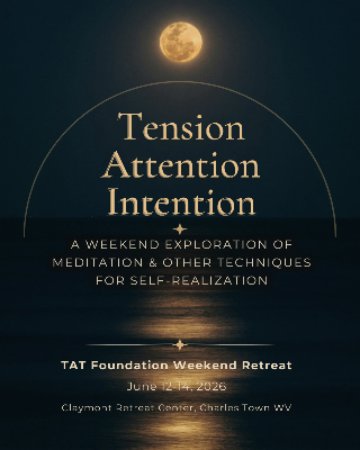


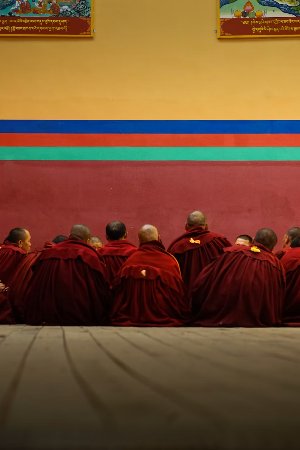



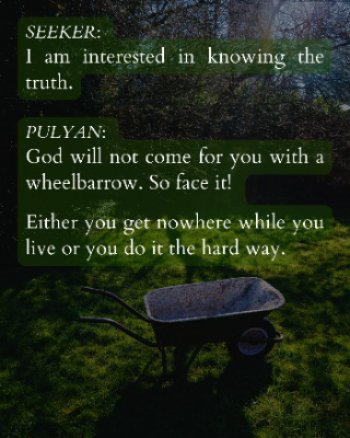





 Update for the Online Self-Inquiry Book Club:
 Esoteric searchers, transcendentalists, mystics, scientists for the new frontiers…